Dr Raghuram Rajan, Chief Economic Adviser to the MoF,
GoI, was the chief guest at the IIMB convocation this year. I had the privilege
of meeting him briefly before the convocation started. We talked about jugaad,
Indian industry's innovation capabilities, and which companies stand out on the
innovation dimension.
One question that Dr. Rajan asked was something that I
have thought about often: why do we struggle in our large projects that involve
the development of complex products like tanks or fighter aircraft? And why are
we able to do relatively better in areas like space and missiles? While I gave
an immediate response to his questions, these are important enough questions to
merit a more elaborate response.
1. Overly-exacting Specifications
The starting challenge for creating defence products from
India is the product specifications. One common criticism of our armed forces
is that their specs are usually a combination of the best performance on each
parameter offered by different vendors. Often, a product with such a
combination of characteristics is either unavailable anywhere, or if it exists,
is exorbitantly expensive.
There seems to be some truth in this criticism. Consider
this example: according to press reports, in the now "under the
scanner" Westland deal, there was only one helicopter globally available
that met the specs set by the Indian Air Force. Much of the current debate is
about who "diluted" the specs to "allow" the Westland
chopper to be considered!
2. Lack of Clarity regarding what Local Development means
Designing a product locally does not mean that all
components and sub-assemblies have to be made locally. In fact, one of the key
decisions to be made is what will be done locally and what will be sourced from
elsewhere.
Take the example of Embraer, the Brazilian aircraft
company. Embraer retains ownership of design and system integration, but
collaborates with other companies as diverse as Hitachi and GE for important
sub-systems. Yet, Embraer aircraft are still regarded as Brazilian planes! Their
big supplier partners share some of the investment and development risk with
Embraer.
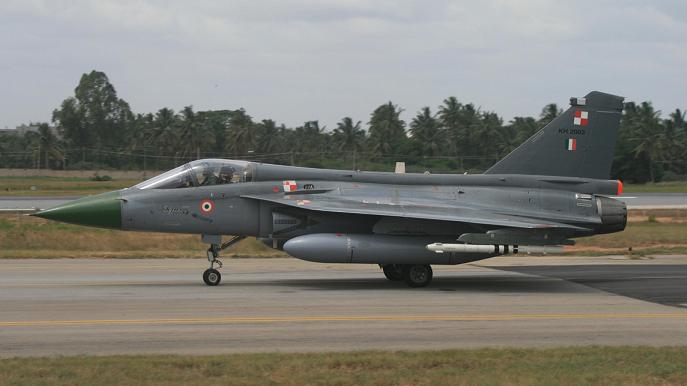
Contrast this with the development of the LCA. Much is
made of the fact that India has not been able to develop its own engine for the
LCA. But most aircraft companies don't design or make engines themselves!
Most defence products require higher grade components
with "MIL" certification. For many components, it’s cheaper to import
from existing suppliers than design and manufacture them in India to MIL
standards.
A related issue is the definition of the objective of the
development project itself. Whenever I have spoken to people involved with the
LCA project, they have proudly drawn attention to the number of new
technological capabilities ranging from composite materials to advanced
avionics that were developed in India as a result of the project. So, even
though the LCA itself may not have been inducted into the Air Force so far,
India has undoubtedly gained from the LCA project. Of course, this is limited
consolation as the country has not got the aircraft we needed for the defence
of the country!
3. Lack of Technological competence in Advanced Technologies
Complex products require advanced competence in diverse
areas. Often, India does not have companies or institutions that have the
required level of competence in each of these areas. Even when available, such
skills may be relatively shallow and limited in scope. When the skills exist in
the academic or research institutions, they may not be application-oriented.

LCA project head Dr Kota
Harinarayana gave some interesting insights into this challenge when I spoke to
him some years ago. When the LCA project started in the mid-1980s, we faced
serious handicaps in composite materials, avionics and a host of other
technologies. Dr. Kota Harinarayana who headed the Aeronautical Development
Agency (ADA) that was created for the LCA project realized that it would not be
possible to create all the needed expertise within ADA or HAL. He therefore
visited all the leading engineering schools in the country, made an assessment
of the expertise available, and created a large collaborative platform to rope
in this expertise. Very soon he realized that these individual faculty members
lacked either the managerial expertise or the interest to manage complex
research projects. So, ADA had to work with the professors to break down the
problems into more manageable pieces, each of which could be tackled as a Ph.D.
or M. Tech. project. ADA funded the creation of physical infrastructure
wherever necessary and did the overall programme management and coordination.
So, there is a great deal of managerial effort that has to go into working with
academic research partners who might have the required technical expertise.
4. Inadequate Number & Frequency of Experimentation
and Testing cycles
While complex products are today largely designed on the
computer (the Boeing 777, for example, was designed predominantly based on
simulation through CAD/CAE), some amount of physical prototyping and testing is
always required. Rapid testing, using low cost mock-ups and prototypes,
wherever possible, is critical to completing the project quickly. But, design
of complex systems in India is undermined by inadequate resources for
experimentation and testing. This results in overly long development cycles.
I don't have hard evidence, but I am sure the CAG's
notion of wasted and infructuous expenditure also hampers adequate
experimentation. In 8 Steps to Innovation, we wrote about “failure
fallacy” - the purpose of experimentation is testing assumptions and learning,
not success and failure! Given our administrative rules and audit procedures
(the infamous “Infructuous expenditure” that is the subject of criticism of
successive CAG reports!), it appears that our system can easily fall prey to
this failure fallacy.
5. Design/Development & Production Gap
After independence, India adopted the Soviet model of
separation of design and development from production. As a result, we have a
huge network of government owned and operated research and development
laboratories and facilities, and a separate network of production
units/factories (like the ordnance factories in the case of defence).
The separation between R&D and manufacturing has
worked to our disadvantage in multiple sectors. Take the case of telecom, where
the Centre for Development of Telematics (CDOT) set up in the 1980s created
contemporary digital exchanges that were well suited to the hot and dusty
conditions of India and the then prevalent high number of “Busy Hour Calling
Attempts.” But as I documented in From Jugaad to Systematic Innovation: The
Challenge for India, the separation of the technology provider from the
manufacturers (a set of licensees who themselves had limited technological
capabilities) meant that CDOT was one step removed from the marketplace and
that the licensees never invested in creating their own technological capabilities.
As a result, over time, the CDOT technology failed to keep pace with the needs
of the market and lost out to products imported from global telecom giants.
The separation of R&D from production is particularly
detrimental to the commercialization of new technologically-intensive products.
The designers tend to be relatively insensitive to concerns of
manufacturability or support, and hence the product can prove difficult to
manufacture in large volumes, or at a reasonable cost. The manufacturers have
inadequate understanding of the know-how and know-why, and in the process of
trying to make manufacturing easier or more streamlined make changes in the
product or process that make it deviate from the required specifications.
Commercialization of complex technologies needs close
working between R&D, engineering and production, and this becomes more
difficult if this involves crossing organizational boundaries. There are major
challenges even within the same organization – the success of Samsung in the
memory chip industry, for example, is often attributed to the co-location of
these three functions as this makes communication and problem-solving much
easier.
6. Lack of Tacit Knowledge
Besides, successful productionization or
commercialization of products involves the generation and retention of a large
amount of tacit knowledge. I am reminded of an experience that was narrated to
me by the Chairman of Samtel Color, Mr. Satish Kaura, many years ago. Samtel
entered the Colour Picture Tube market in the early 1980s when colour TV was
first introduced to India. Samtel sourced its technology from a leading
Japanese company. However, they struggled to achieve the same level of
productivity of CPTs as the company from whom they sourced the technology.
However, a leading Korean company was able to master the technology from the
same source. Ironically, Samtel had to hire consultants who were ex-employees
of the same Korean company in order to get the tacit knowledge of how to
improve the yield of the production line!
Successful product companies build huge internal
repositories (both informal and formal) of such tacit knowledge. It is this
knowledge that helps them avoid repeating the same mistakes or being able to
move ahead rapidly when a project gets stuck. Building this knowledge requires
going through multiple product development cycles and finding ways of capturing
and building on such knowledge from one project to another. But, if one project
takes 30 years, you have a problem! In complex product development like
aircraft design, we have not gone through a complete project cycle even once.
That is a major disadvantage we face.
Why have we done better in the Space Programme?
My hunch is that we have done better in the space
programme because that is a vertically integrated programme, has much clearer
strategic objectives, is managed more effectively, and because its not a
volume-oriented programme – you don’t have to move to serial production, so
many of the productionization and commercialization problems don’t exist.
What needs to be done to improve our ability to build
complex engineered products?
This is a big question in itself and I will leave it to a
future post!