Saturday, September 27, 2014

Making Indian Manufacturing Competitive

By an interesting coincidence, I spent two successive days last week attending events related to manufacturing competitiveness. The first was a panel discussion organised by CII Malwa Zone to coincide with the launch of the Prime Minister of India’s new “Make for India” campaign, and the second was a day-long seminar designed by the Institute for Competitiveness (IfC) that culminated in the award of the Porter Prize.


Get the Basics Right

I am a strong believer in getting the basics right if you want manufacturing to take off. Some of these basics are captured in the World Bank’s “Ease of Doing Business” survey that covers permissions and sanctions required to get going and run an enterprise. This is an index on which we don’t do well (current rank in the 130s).


The basics I am referring to here are availability of land/factory premises, electricity, water, key raw materials and labour, of a minimum quality at a reasonable cost. Michael Porter underlined the importance of these factor conditions in his “diamond” framework for the Competitive Advantage of Nations.


Manufacturing and Logistics

Competitive manufacturing requires timely receipt of inputs, and for the goods produced to reach dealers and customers on time in good condition. While IT-based services can work in islands because the output is beamed to customers through satellite links, manufacturing is a logistics-based activity that depends on end-to-end efficiency. Individual companies are nodes in international production networks and can’t afford to be inefficient in either in-bound or out-bound logistics.

But, according to a recent article I read by Lal and Vishwanath, the freight rates between the core and periphery of an Indian city can be as many as 5 times what they are in the US! Traffic congestion and poor roads make progress within cities slow – a recent report suggested that the average vehicle speed in Bangalore is 9 kmph – leading to high fuel consumption, limited trips per day, and a longer time to recover the capital cost of a transport vehicle.

Politicians and Bureaucrats don’t understand

Politicians and bureaucrats tend to take a sanguine view of the importance of many of these basics. I have heard them say things like “if the power supply is not reliable, why don’t you use a generator?” without understanding that installing your own generator pushes up capital costs, and the cost of generated power (particularly in small scale) is multiple times the cost of power generated and distributed through a well-functioning grid. Many manufacturing units work on thin margins and can’t afford these additional costs.
It was therefore refreshing to hear the Prime Minister agree in his “Make for India” speech that it is the government’s responsibility to provide the core infrastructure required by the manufacturing enterprise. He also observed that companies choose a location not based on the incentives available but based on the basic facilities provided!


Kevin Stolarick of the India Institute for Competitiveness, University of Toronto, put this well when he emphasised during the IfC that we should focus on competitiveness at the local level. He pointed out that national competitiveness depends on local competitiveness, and hence our priority should be to make Delhi, Ahmedabad or Mumbai competitive rather than looking at BRICS.

In his keynote at the Porter Prize event in the IfC, Michael Porter underlined this when he observed that regions are the most important economic unit for competitiveness. He went one step further by pointing out that efficiently functioning clusters provide the “lift-off” factor that takes one region ahead of another.

Indian Companies have the Capabilities

Indian companies have shown that they are capable of optimising efficiency of the factors directly under their control. During his talk at the IfC, Shashi Ruia of the Essar group pointed out that in their world-class refineries in Jamnagar, companies like Reliance and Essar are able to achieve globally efficient throughput. Though the technologies used in these refineries have been sourced from global vendors like Dupont, 90% of the fabrication and detailed engineering has been done by Indians in India, so we clearly have the ability to be competitive.

Inspections and Regulatory Compliance

There are sharply polarised views on inspections and ensuring regulatory compliance. While the Prime Minister set the tone for this in his “Make for India” talk by calling for greater trust in each other and recalling his government’s decision to do away with attestation of document copies by gazetted officers and instead move to self-certification, I found it interesting that one of the industry participants in an IfC panel believed that government inspection is required. His only wish was to reduce the number of regulatory agencies (“why can’t the boiler inspector and the factory inspector be the same?”).

Skills and Training

The issue of skills and training came up in many of the panels of the IfC. The facts are well known – India needs to generate 10-15 million jobs every year if it wants to ensure that the demographic dividend does not turn into a demographic disaster. These jobs can’t be generated by the service sector alone and we need a robust manufacturing sector that can provide such opportunities. But, we currently don’t equip our youth with the right skills to make productive contributions to manufacturing.

Skill development was initiated by the previous government, and has now been upgraded into a separate department by the new government. So far, the skill development mission has succeeded in skilling about 400,000 people a year. Most of this is done in the PPP mode – see my earlier post on a successful initiative launched by PARFI.

But, skilling is not only a supply side issue. Companies need to be willing to recruit skilled manpower at higher cost rather than unskilled labour. Many companies have been unwilling to do so in the past. We need to publicise the example of companies such as Bharat Forge that became globally competitive  by adopting better manufacturing technology (in this case, greater automation) and shifting to a better educated and skilled workforce.

However, effective skilling is not only about training methods, certification and scale. Social issues have also to be addressed if we want our skilling efforts to deliver results. In many parts of the country, absenteeism is a serious issue with workers missing out on work as much as 20% of the time due to poor health, family emergencies and social and religious commitments.

And, it’s not clear that our youth will opt for vocational courses even if they are available and offer a path to a good job. The aspiration for a white collar job is high and has been reinforced by the success of the software and BPO industries. Kevin Stolarick put this well when he called the success of services a curse.
Another issue relevant to the skills and employment debate is the need to get the capital – technology – labour mix right according to the requirement of the industry. Speakers at the IfC pointed out that China seems to have got this right by investing in the most labour-intensive industries (like making toys) at the village level.

Conclusion

Earlier governments did realise the importance of manufacturing but never put their muscle behind it. I am glad that for the first time we have a government that is starting a nationwide campaign to promote manufacturing, and that this campaign is being driven from the top. But, we shouldn’t under-estimate the complexity of this challenge, and we therefore need a detailed blueprint if we are to succeed.

[The views expressed here are the personal views of the author.]


Saturday, September 20, 2014

Defying the Odds: Invigorating Accounts of Dalit Entrepreneurship

Since independence, India has had a strong commitment to social justice, particularly towards making sure that the centuries of acute discrimination against those at the bottom of the caste hierarchy come to an end. Besides making untouchability illegal, reservation of seats in institutions of higher education and government jobs has been the cornerstone of the government’s policy in ensuring the social and economic advancement of the scheduled castes and tribes.

With the advent of liberalization, the locus of economic activity has shifted to the private sector. At the same time, concerns about government spending have led to curbs on government employment. Naturally, this has led to questions about the effectiveness of reservation policies in such a scenario. As a result, politicians started asking for reservation in the private sector as well.

There is no reliable data as to the representation of disadvantaged castes in private sector employment. But it is amply clear that dalits are under-represented at the higher levels of Indian industry. They are under-represented in many other vocations as well – see, for example, Siddharth Varadarajan’s article on caste in the media.

Some Important Questions

But, liberalization has provided opportunities as well. Have dalits been able to take advantage of the improved climate for business by starting their own enterprises? Or, does caste come in the way of entrepreneurship too? After all, capital, skills and education are all important ingredients for entrepreneurship, so it is reasonable to expect that restricted access to these ingredients might impede entrepreneurship.

When I heard that there is a new book on dalit entrepreneurship, I was keen to read it in the hope that it would answer some of these questions as well as give us a picture of what is coming in the way of entrepreneurship by people from disadvantaged backgrounds.

The Book

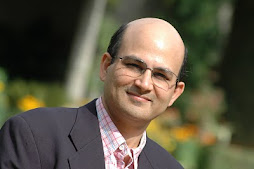
Defying the Odds: The Rise of Dalit Entrepreneurs (Random House India, 2014) by Devesh Kapur, D. Shyam Babu and Chandra Bhan Prasad is a must read for anyone with an interest in the present and future of Indian society. I read it carefully the first time, and went through it a second time to take notes. [The picture below shows Devesh Kapur, one of the authors.]


This book tells the stories of 21 successful dalit entrepreneurs spanning the north, west and south of India. I don’t know why the east is left out, but that’s possibly because the headquarters of the main dalit industry association (DICCI) is in the west, in Pune.

Broad Patterns

Most of these dalit entrepreneurs have come from large families with several siblings. Almost without an exception, their parents recognized the importance of education, but lacking the resources to educate all their children, focused on one or two. These dalit entrepreneurs were largely part of these chosen few.

None of these dalit entrepreneurs have had it easy. Most started from extreme poverty. Loss of one or more parent early in life was common. They have gone through cycles of their own, almost losing all their resources and then starting again. Their success is due to their perseverance, their ability to pick themselves up and go forward again.

[The picture below shows one of the protagonists - Milind Kamble - with one of the authors - Chandra Bhan Prasad.]


Though many of them were born in rural locales, most of them succeeded as entrepreneurs in urban centres. Mumbai, Nagpur, Pune, Jaipur, Noida, Delhi, Lucknow and Hyderabad are some of the places where their enterprises succeeded. This only reinforces BR Ambedkar’s memorable comment: “What is a village but a sink of localism, a den of narrow-mindedness, and communalism?” Cities offer not only the advantages of agglomeration and specialization, but also the benefits of relative anonymity.

Though dalit entrepreneurship may be seen as an alternative to government employment, that’s probably too simplistic. A government job, particularly as an officer, comes through from many of the life stories, as a preferred mode of enhancing one’s status and economic condition. Though there are only three cases reported in this book where someone left a government or public sector job to start an enterprise, reservation plays an indirect role in many of the stories – a brother or spouse has a government job that provides economic stability; reservation in academia provides access to a diploma or degree either to the protagonist or a sibling; or the elusive quest for the civil services acts as a spur for higher educational qualifications even though the quest is ultimately unsuccessful.

No person becomes successful on his own, and none of these 21 entrepreneurs (20 male and one female) were an exception to this. While the unsurprising sources of support are family (father, mother, wife, husband, brother, sister), it was refreshing to read about many higher caste men who supported them with capital, shelter or mentorship. Many of the successful entrepreneurs in this book had non-dalit partners at some time or the other.


The most impactful non-dalit supporter was a school teacher who inspired one of the entrepreneurs, Murali Mohan, when he was young. Not only did he prevent Murali Mohan from dropping out of school by providing accommodation at his home, he persuaded Murali’s father to educate him in Bangalore and insisted that he pursue science. With an MSc in Biotechnology and a diploma from the Central Food Technology Research Institute in Mysore, Murali an exporter of gherkins, is one of the best educated in this group of entrepreneurs.

Though several women feature in this book by either educating their children or supporting their husbands, only one woman dalit entrepreneur is profiled. I guess one should not be surprised that it’s difficult to overcome the twin disabilities of caste and gender.

Sectoral Coverage

The range of industries represented by the entrepreneurs in this book is wide. Dealing in scrap, hospitals, garment exports, oil trading, pest control, repairing oil rigs, polymer trading, cable laying, gherkin exports, logistics, packaged foods and steel rolling are some of the businesses started by these entrepreneurs. Real estate and construction figure in multiple stories, and seem to be an important means of wealth creation.

The overall trend towards outsourcing has opened up opportunities for many of these entrepreneurs, allowing them to be either the one providing the outsourced service, or using outsourcing as a means of lowering the capital required to enter a business. I thought that modern technology industries such as software and BPO should be relatively free of caste biases and was hence surprised to find no story from these industries in this book. Of course, that may just be an artifact of the sample the authors had access to (largely from the DICCI database, it appears).

The formal financial system – banks, other finance companies, private equity, etc. – is conspicuous by its absence from this book. This may be because the book is focused more on the entrepreneurs than their financing strategies, but I find it strange that these financial institutions don’t figure at all. This certainly merits further investigation.

A Policy Takeaway


For me, the biggest policy takeaway from this book is the importance of education. If only the parents of the entrepreneurs profiled here could have educated more of their children, we might see more entrepreneurs. This book demonstrates that entrepreneurial drive has nothing to do with caste, and we are missing out on creating many more successful entrepreneurs if we don’t provide an easily accessible basic education to all. 

Sunday, September 14, 2014

Profiling Gram Oorja and PARFI: Two Exciting Social Enterprises

In recent years, it has been heartening to see a good number of well-qualified and “successful” men and women from “middle class India” take on the challenge of national development. The social enterprise bug has bitten these professionals and they have taken on, in their own way, some of the country’s biggest challenges.

Innovation, scale and sustainability are their keywords. Their arenas of work encompass education, health, renewable energy and livelihoods.

This phenomenon is not entirely new, of course. One of the most well-known such social enterprises, Aravind Eyecare, was founded about 30 years ago. But the achievements of Aravind founder Dr. G. Venkataswamy, and, more recently, people like Dr. Devi Shetty of Narayana Hrudayala, Harish Hande of Selco and Madan Padaki of Head Held High have triggered a widespread interest in taking on these tough challenges.

In the last month, I had occasion to meet two passionate individuals who have taken the plunge into making a difference through social enterprise. Both their experiences were insightful, so I thought I could share these here.

Gram Oorja

I haven’t figured out why, but Pune seems to be a hub of interesting work on energy. I wrote earlier about the Pune Power Model, an industry initiative to avoid load-shedding that emanated from this city. Prayaas, one of India’s leading think tanks focused on energy is also based there. Gram Oorja (“Rural Energy”) is the latest in this series of distinguished energy initiatives from this city.

As I write this post, there is much excitement in the media about the launch of iPhone6. But, the world of exciting new electronic gadgets is far removed from the energy challenges of India. About a quarter of India lacks access to electricity. The actual number may be much more – I remember my friend Vidyanand Jha telling me that many villages in Bihar were electrified years ago, but there is no supply through the grid today as they have been disconnected due to prolonged failure of their residents to clear their dues.

While the State is unable to find sustainable ways of supplying power to rural consumers, decentralized solutions have emerged. Some of these are straightforward entrepreneurial initiatives – someone sets up a genset and supplies power to homes nearby. Others have an ingredient of alternate energy solutions – Husk Power Systems has a model of small power systems that run on biomass and has franchised these in some parts of Bihar.


Gram Oorja has demonstrated that a solar-based, decentralized model can also work, but under certain conditions. Their current focus is on rural communities who do not have access to grid power because they live in remote places that are not connected to the grid because laying transmission lines would be too expensive. For these villages, a solution like solar energy is ideal because once it is set up, it requires little maintenance.


Anshuman Lath, an IIM Bangalore alumnus, is one of the founders of Gram Oorja. During a recent talk at IIM Indore, he shared with us the interesting social model under which one such solar system works in Darewadi.

The system is managed by the villagers themselves. Village youth have been trained to take care of essential functions. The village council has to take tough decisions like disconnecting those who fail to pay. So far, the council has shown its willingness to stand up to even influential local users. Finally, basic economics forced one such local user to pay his dues and return  to the local grid – he had a marriage in his family and accessing the local power microgrid for the function was much cheaper than hiring a generator for the event from 30-40 km away!

Apparently, before the advent of this solar system, villagers used to send their mobile phones with anyone who was visiting the nearest town (a whole day’s journey, including a long walk from the village to the nearest bus stop) to get them charged. A shop in town provided this service for Rs. 5 per mobile (I hope I got the number right) which if you look at the power involved was 100 times the cost of accessing the same amount of power at home!


Anshuman explained that solar power is still too expensive to recover the capital cost from users. The Gram Oorja project I described above needs to recover only the cost of the local distribution infrastructure and running costs, as the solar panels were donated by Bosch as part of a demonstration project.

Pan IIT Alumni Reach for India (PARFI)

PARFI is an initiative that has grown out of the Pan IIT Alumni Association. I have never attended a Pan IIT meet, but Pan IIT conferences have attracted excellent speakers at the different venues where they have been held.

Somehow, Pan IIT itself always came across to me as an elitist, self-congratulatory movement, an effort by IITians to show their clout. Not surprisingly, the association itself has been at the centre of some controversy with accusations that one group of alumni has tried to corner the leadership ignoring democratic processes.

So, I was pleasantly surprised when I recently had occasion to hear about PARFI. The origin of this organization is a plea from ex-president Abdul Kalam to Pan IIT to do something concrete for the country.
PARFI is focused on creating livelihoods. Its model is simple (always a good sign, indicates it’s likely to be scalable!). They set up rural gurukuls across India to train youth for industrial jobs (drivers, welding, construction, etc.). Each gurukul has an anchor industrial client who promises to place the students in its enterprise, so placement is not a problem. The same enterprise also provides instructors for the gurukul.


The students are drop-outs from poor families, sourced through NGO partners. They are trained in a residential gurukul mode under the eye of retired servicemen. This is essential to inculcate discipline and soft skills in the trainees. PARFI’s programme underlines the fact that skilling and livelihoods is much more than just training and certification. It’s also about socialization into regular work habits and attitude. Interestingly, PARFI has found that the work ethic varies quite a bit across regions, with young men from tribal origin in Jharkhand being some of the most diligent.


The training is short, and typically lasts about 30-45 days. Students get loans through a microfinance mechanism and the loans are recovered through EMis after the student starts working.


Avinash Jupudi, an IITB and IIMC alum who manages clients and partners for PARFI, visited us at IIM Indore some time ago. It was great to hear about PARFI from him.   

Conclusion


I was really enthused to meet both Anshuman and Avinash. They are both smart, committed, and above all, very grounded. The future of social entrepreneurship will be bright if we can have more such youngsters entering the fray.

Saturday, September 6, 2014

The Role of Academic Institutions in Supporting Thought Leadership

India can be the home of thought leaders across disciplines. We have some impressive role models – Professor J. Ramachandran from IIM Bangalore whom I wrote about two weeks ago, and people like Anil Gupta, Ramachandra Guha, Raghunath Mashelkar, A. Paulraj and Manindra Agarwal whom I wrote about last week.

In my last post, I outlined a possible agenda for the individual scholar who aspires to have impact. The five elements of this agenda are: (1) View yourself as more than a teacher; (2) Have a clear focus and strategic intent; (3) benchmark against the best; (4) strive for continuous improvement; and (5) manage your time judiciously.

But is following this agenda with individual determination and perseverance enough? Most of us work in academic institutions. These institutions have their own missions, and set their own priorities and rules of the game. Unfortunately, many institutions in India don’t provide the environment needed to support thought leadership. Excessive teaching loads, absence of funding for research, restrictive leave and travel rules, the absence of a climate to discuss ideas, and control-oriented leadership are some of the inadequacies of the Indian system.

But, let’s assume that there are some institutions today that aspire to do better, that want to provide an environment conducive for scholarship. What should be their agenda, and how should they be managed?

Building Supportive Institutions


There are some core foundational elements which any organization needs to provide for its members to do well. These include treating individuals with dignity, transparency (or, at the minimum, consistency) in organizational processes and decision-making, and basic hygiene factors like good physical working conditions and regular and fair compensation. From what I hear from friends who work in institutions across the length and breadth of India, these basics are themselves scarce.

But the good news is that we have a new generation of academic leaders in both the public and private sectors who have realized the potential of our country and want to change things. Here is what I think they should focus on, once they have the basics listed above in place.

Design for a Balanced Workload

People need time and space to come up with original ideas. Research is not something that can be fitted into the gaps between classes. It needs fairly uncluttered time. So, clearly, careful design of faculty workload is critical to create the right environment for thought leadership.

What’s the ideal workload? Most good US universities require faculty to teach 4 courses a year. Somewhere in the region of 120-150 hours of teaching would seem to be ideal. Equally important is the distribution of that teaching load. Many productive faculty find it helpful to do all their teaching over two semesters or terms so that they have the remaining time to focus on their research and writing.
Institutions need to hire enough faculty to allow for a workload that balances teaching and research.

Faculty who are early in their career face enough challenges in trying to establish themselves as scholars. Institutions certainly need to avoid burdening them with administrative responsibilities at this stage.

Push and Pull for Excellence

Indian institutions have traditionally been weak on motivating high levels of performance. Thanks to accreditation requirements and stakeholder pressure, this is beginning to change. Setting high expectations that require faculty to stretch should help to move towards excellence.

However, some cautions are in order. During a recent discussion with some other IIM directors, it quickly became clear that overly-elaborate points systems that measure (and often monetize) everything may be counter-productive.

Another caution is to stretch gradually and not to the extent that people feel tempted or compelled to resort to inappropriate means to achieve expectations. India already has the dubious distinction of being one of the major centres of academic fraud, and we don’t want to make this reputation worse than it already is!

Personally, I would favour an individual goal-setting process where each faculty has an individual plan for what s/he seeks to achieve. Each year’s plan should be an improvement on the previous year’s plan. The plan should necessarily have a high content of research and writing, though the exact mix could vary from one individual to another.

While institutional expectations and the goal-setting process provide the pull for excellence, given where we are today a strong push is required as well. That’s where faculty development has a significant role to play.

Make Faculty Development a Strategic Priority

Many of our leading institutions have what is called a “Faculty Development & Evaluation Committee” (FDEC). Intriguingly, these committees often focus only on evaluation and the “D” is deafeningly silent.
Indian higher education is on an expansion trajectory. Given the limited mobility from industry, most of the faculty positions will be filled by young men and women straight from doctoral programmes. While a small percentage of these PhDs will come from foreign universities, the bulk will come from Indian institutions.

These young PhDs from India are bright and capable. But if they are to become high-performing scholars, they will need to be mentored and supported. In addition to careful goal-setting, they will benefit from frequent and constructive developmental reviews and feedback. And, institutions need to create a portfolio of initiatives to support their development.

We are trying to put together such a portfolio at IIM Indore. Its early days, but we have some of the ingredients in place. See the chart below….


But, faculty development is not only about money and incentives. It’s about mentorship and intellectual support. Helping young faculty find the right mentors is one of my major challenges today.

It often surprises me how little time heads of institutions spend on speaking to their faculty one-on-one in a developmental frame. Considering that most people who come to leading academic institutions as faculty do so because of some internal trigger or motivation, I would have thought that all the leadership needs to do is find out how it can help each individual attain her potential. But, in my 18 years as a faculty member, I can’t recall any occasion when a director asked me that question or had a meaningful discussion with me about my career and aspirations.

Invest in a Strong Doctoral Programme

This is one of the best investments you can make if you want to build scholarship in your school. Not only do doctoral students keep abreast of the latest developments in the field and current methodologies, they provide an ongoing source of ideas and discussion triggers. They also provide excellent collaborators for faculty. But, it’s amazing how many institutions in India see doctoral programmes as a burden rather than a strong catalyst for scholarship.

Institutional Platforms for Thought Leadership

Forming Special interest groups (SIGs) around inter-disciplinary themes can be a useful way of getting people to work together in potentially impactful areas. This is an initiative we have just started at IIM Indore, and we’ll hopefully have more to report in times ahead.

How do you choose the themes? Look for areas which are relevant to the mission of your institution, that are relatively under-studied, and that are of importance to some important stakeholder(s). Beyond that, having a critical mass of interested individuals would help drive the SIGs forward.

Other important platforms are powerful databases and specially-designed or collected datasets.

Conclusion


India has a good set of competent young faculty in its leading institutions. I hope the leaders of at least some of these institutions will create the conditions needed to help these faculty flower and bloom as thought leaders.


[The views expressed here are the personal views of the author.]

Saturday, August 30, 2014

Becoming an Impactful Scholar: A 5-Point Individual Agenda

This year I had multiple opportunities to speak to doctoral students and faculty at some of our leading institutions. IIM Rohtak had organized an internal Faculty Development Workshop; IIM Ahmedabad invited me to speak to their new cohort of doctoral students; and we had our own Faculty Development Programme (see picture below) as well as the Conference for Excellence in Research & Education (CERE) at IIM Indore.


Through this blog, I want to share the perspective I presented to these groups.

First, here’s a quiz question. Who are the five people in the picture below?


Anil Gupta is arguably the foremost evangelist of grassroot innovators in developing countries. He has spent the last twenty years documenting their innovations and recognizing the innovators.


Raghunath Mashelkar has had a distinguished career as a scientist and engineer. He led the National Chemical Laboratory with great distinction and later, as Director General of CSIR, raised national awareness of intellectual property rights.


Arogyaswami Paulraj developed the first indigenous sonar for the Indian Navy and later set up the Central Research Laboratory for Bharat Electronics Ltd. He moved to Stanford after taking early retirement from the navy, and is today credited with being one of the inventors of MIMO technology, a critical part of the backbone for 4G wireless systems.


Manindra Agarwal and two of his students at IIT Kanpur developed an algorithm that works in polynomial time to determine whether a number is prime. They thereby solved a problem that had defied mathematicians for years.


Ramachandra Guha is today India’s leading modern historian apart from being an acclaimed columnist and writer about cricket.


What’s common between Anil Gupta, Mashelkar, Paulraj, Manindra and Ram Guha?

For one, of course, they have all been very successful in their chosen fields and received international acclaim. But they have one common characteristic – they all received their PhDs from India, and all of them made their primary intellectual contribution working in India.

It is possible to work in India and do world class intellectual work. We saw another example of this in my previous post on Prof. J. Ramachandran.

So, what do we need to do if we want to emulate any of these successful scholars?

I suggest the following 5-point Agenda:

View Yourself as More than a Teacher

The first important thing is to view oneself as more than a teacher. Ideally, one should see oneself as an engaged scholar who moves seamlessly between creating new knowledge and disseminating it. One has to see research and knowledge creation as core, not as an additional chore. In the management sphere, it is important to straddle conceptual strength, rigour and relevance in any such research one undertakes. See my earlier post on Prof. J. Ramachandran for some insights into how to do this.


Focus & Strategic Intent

The second (and probably equally important to the first) thing is to focus. With the explosion of knowledge today, it is unlikely that one can become an outstanding scholar in multiple areas. Instead, one should choose any one area that has potential impact and dig into that area.

Becoming an acclaimed scholar is a marathon and not a sprint, so one should be willing to be in it for at least the next 5 years, probably even more. Along with focus, one should ideally have a strategic intent to be the best scholar in that (sub-) field of choice and be willing to work hard towards that. Aligning one’s teaching to the focus area to the extent possible would help one synergise different activities.

Of course, if one has a choice, one should be careful in choosing the institution where one works. The key question is, “does the institution support the development of engaged scholars?” Does it allow the time and space, and provide the infrastructural as well as intellectual support to promote such development?

Benchmark against the Best

The third important requirement is to benchmark against the best. Today, Indian institutions may not expect the same quantity and quality of research output as established institutions abroad do. But, to become a well-accepted global scholar, one should take on the same standards as would be expected by a top institution anywhere. For example, a young assistant professor entering an IIM should benchmark herself against the tenure requirements of a top US school.

Continuous Improvement

Becoming an acclaimed scholar will involve considerable stretch. While the aspiration or strategic intent to become one might provide the energy and push to get there, the mechanics of reaching there are still important.

I have been impressed by the idea of deliberate practice. Research on high performing sportsmen and performers shows that they have put in more than 10,000 hours of practice before they reach the pinnacle of their discipline. But, just spending 10,000 hours is not enough – these 10,000 hours need to be spent on continuous improvement, often driven by a coach or mentor who can identify one’s weaknesses and help one iron them out.

This idea of continuous practice can be applied to scholarship as well: take on more difficult research problems, reach out to higher quality publication outlets, and strive to enhance one’s teacher ratings based on feedback.

Having a good mentor is invaluable in this process. Unfortunately, there are not enough good mentors around in India, so one might have to reach out to established scholars in other parts of the world. Fortunately, there are many scholars of Indian origin all over the world who are willing to help.

Manage your time Judiciously

Last, but certainly not the least, is good time management. I have already emphasized focus and aligning one’s teaching and research to the extent possible. As a young professor, everything looks interesting, but it is imperative to be focused and avoid getting into activities that distract from good scholarship. If one has a choice, its good to stay away from routine academic administration at least in the formative years. I would suggest doing the minimum required to be a good organizational citizen, but otherwise staying away from tasks that distract one from the main mission of scholarship.


Tailpiece

As I mentioned earlier, institutional support is important for an individual scholar to make his mark. What should be the institutional agenda to support such individual scholarship? That will be the subject of one of my next posts!


[The views expressed here are the personal views of the author.]

Thursday, August 21, 2014

Creating Management Thought Leadership from India

There is a gradual yet perceptible change happening in our top management institutions as far as research and publication is concerned. More faculty are taking research seriously, and targeting top journals to publish their findings.

This shift is the result of three drivers: Firstly, institutional policy changes now place more emphasis on research output as a requirement for promotion. Secondly, a new generation of better trained and research-oriented faculty has joined these institutions. And, thirdly, and perhaps most importantly, there is a growing aspiration to be seen as more than a teacher, i.e. to make a place for oneself among the larger academic peer community.

The Challenge of Thought Leadership


Many observers of Indian management academia have been critical of our failure to achieve thought leadership. What these critics seem to mean is that we don’t have management gurus from India who are world renowned, and whose ideas are eagerly applied by managers everywhere. We have no Michael Porters or Philip Kotlers from India. Of course, there have been India-born management gurus like CK Prahalad or Sumantra Ghoshal, but they made their reputations outside India’s borders.

Thought leadership is not achieved by merely proclaiming oneself as a thought leader. You can be called a thought leader only when others believe you are one!

Thought leadership has some of the characteristics of what we in strategy call a difficult-to-imitate resource. Becoming a thought leader is a causally ambiguous process – it’s difficult to outline an algorithm that will necessarily lead to thought leadership. It’s also somewhat path dependent – you have to be at the right place at the right time working on the right theme. Whether you consider Boston Consulting Group’s Growth Share Matrix, or Prahalad’s “Bottom of the Pyramid” or Vijay Govindarajan’s “reverse innovation,” all of them achieved widespread traction only because they were relevant to real issues that businesses were facing.

Of course, just good and relevant ideas may not be enough. There is often an element of marketing and branding that goes into thought leadership these days.

One barrier to the development of thought leadership from India has been the absence of role models. We haven’t had people we can look up to, working from within India, who have achieved this status. Luckily, that’s changing now.

Emergence of Indian Role Models

An important milestone in the evolution of Indian management thought leadership was crossed when, in December 2013, an article titled “Why Conglomerates Thrive” was published in Harvard Business Review (HBR).

What was special about this? Well, to the best of my knowledge, this was the first time that an article written by business academics based in India was published in HBR.

HBR has an iconic yet paradoxical status in the world of management academia. It is not the typical peer-reviewed, research-based journal full of complex mathematical models or tables of regression coefficients. Yet, it is arguably the most influential management publication outlet as it is read by managers all over the world, particularly in important markets like the US.

HBR may not figure on the “A” lists of leading business schools when it comes to research rigour, and business academics may speak about it disdainfully. Yet I doubt that there are many business academics who don’t have a strong yet secret desire to be have their ideas feature in HBR. Put simply, having your ideas published by HBR is an important step to achieving thought leadership.

I have had the privilege of knowing the authors of “Why Conglomerates Thrive” closely. Prof. J. Ramachandran (JR), the lead author, was my senior colleague at IIM Bangalore (IIMB) from the time I joined there in 1996. The other two authors, KS Manikandan and Anirvan Pant, were both doctoral students at IIMB, and are today faculty members at IIM Trichy and IIM Calcutta respectively.


Inspiration to Indian Management Scholars

JR’s story can be a good source of inspiration to management scholars from India aspiring to thought leadership. A chartered accountant by training, JR graduated from the doctoral programme at IIM Ahmedabad in the 1980s. He had a long spell in the corporate sector (Reliance, Mudra) before joining IIMB as a faculty member in 1991. This was a good time to become a management faculty member, with economic liberalization just taking root and IIMB itself embarking on a journey of change under the leadership of Prof. KRS Murthy (path dependence at work!).

JR’s academic journey started with his focusing on building his reputation as a teacher. He must have done this very well because almost any IIMB alumnus from the 1990s whom I meet asks about him! This is corroborated by his amazingly consistent high teaching feedback scores.

Troubled by the lack of good case studies from the Indian context, JR embarked on writing cases to fill this gap. His cases on the Indian Watch Industry (the eclipse of HMT and the emergence of Titan) and Reliance (co-authored with Sumantra Ghoshal) made a mark, and he received several case awards. Case-writing has continued to be a passion for JR, and his cases on Bharat Forge, ITC and Hindustan Unilever (all with different co-authors) have been recent hits. Teaching, case-writing, and consulting were his focus areas till around 2003.

I am not sure what exactly was the trigger, but around 2003, JR decided to turn his attention to research. (Until then he had appeared somewhat skeptical about publication in peer-reviewed journals because it appeared irrelevant to most managers.)

A few important decisions followed: He decided to submit at least one paper every year to the Academy of Management (AoM) annual conference, the most prominent conference for academics working in “management” (organizational behavior, human resource management and business policy/strategy) in the US. He became active in teaching in IIMB’s doctoral programme and soon had some of the best doctoral students working with him.

Over the last decade, JR remained wedded to three things – relevance, rigour and strong conceptual thinking. This combination of what Van de Ven calls “Engaged Scholarship” has been the distinctive feature of his journey towards thought leadership. JR’s own intellectual contribution may have been more on the relevance and conceptual dimensions but he worked closely with talented and contemporary doctoral students who could bring in the methodological rigour that they had imbibed from their doctoral training.
While many scholars from India have taken the route of collaboration with established names abroad to navigate the treacherous waters of publication in top journals, JR eschewed this and took the risky path of going on his own. There were many disappointments on the way, but his fierce determination driven by confidence in his own ideas enabled him to overcome these setbacks. During this journey, he remained focused on two themes: the evolution of Indian business groups (with a strong belief that the Indian business group has many strengths that are not apparent to the west) and the internationalization of Indian firms.


A key milestone in this journey was the acceptance of the paper “Beyond Institutional Voids: Business Groups, Incomplete Markets and Organizational Form” accepted for publication by the strategy field’s top journal, Strategic Management Journal in late 2013. This was the paper that provided the rigorous justification for the arguments advanced in “Why Conglomerates Thrive.”

What can we take away from the JR Story?

There are several takeaways from the JR story. At the top, I would emphasise the importance of how we faculty see ourselves, i.e. the question of identity. As I mentioned in an earlier post, we need to see ourselves as more than teachers. JR’s experience suggests that we need to see ourselves as engaged scholars, striving for rigour, relevance and conceptual or theoretical clarity in all we do.


This identity needs to be backed up by strong aspiration and drive. Without that we simply won’t have the intellectual and physical energy to overcome the obstacles that will inevitably come in our way. Almost all successful people have a certain perseverance and doggedness that differentiates them from others who give up along the way. Trying to achieve thought leadership is no different.

Choice of problems and focus are also critical. We need to work on problems that are of importance to India but have wider significance. The unique strengths of (Indian) business groups are of interest within our country, but also to managers elsewhere because they call into question some of the “accepted wisdom” on the demerits of conglomerates.

“Bowling alone” is unlikely to work. We need to find good collaborators who complement our skills. JR found them in some very talented and capable doctoral students. Others might find them in colleagues within India or abroad.

I haven’t taken Prof. Ramachandran’s permission to write about this. But I am confident that he won’t mind as long as this acts as an inspiration to many others!


[The views expressed here are the personal views of the author.]

Saturday, August 16, 2014

The Future of Indian Management Education

The annual Indian Management Conclave (IMC) organized by MBAUniverse.com has become an important event to take stock of the state of management education in India and to identify new ways forward. At the insistence of MBAUniverse.com Chairman Amit Agnihotri, I attended the fifth IMC last weekend. Amit had managed to put together a good set of speakers including several from overseas (many through video). Unfortunately, I managed to catch only the second day of the event.


Indian Management Education: Vision 2025

One of the highpoints of this year’s IMC was the release of a document titled “Indian Management Education: Vision 2025” (the photo below shows B-school deans discussing the report). Frankly, I was quite skeptical at first, but upon reading the document I realized that it has some good points. It starts with a useful historical perspective that brings out the steady evolution of Indian management education till the explosive growth over the last two decades. There is a simple SWOT analysis that brings out the current status of different categories of management institutes and programmes.


Indian management education is clearly heterogeneous and not all business schools can or should have the same agenda. Therefore, one thing I particularly liked about this vision document is the attempt to segment Indian management education into 3 distinct segments.

Vision 2025 sees India creating 50 “global” business schools, 500 “national” business schools and 2000 “skill-based” business schools. The global business schools will have one of the three global accreditations, be known for their research and thought leadership, be ranked internationally and have international students as part of their student body. The national business schools are seen as aligning with at least one important dimension of India’s national development agenda and focused on meeting national needs. And the “skill-based” business schools will be linked to the Skills Development Mission of the country and meet clearly defined skills requirements as emerging from new initiatives like the National Skills Framework.

China has done better than India

The Vision 2025 document brings out some sharp contrasts between India and China in the realm of management education. Though China embarked on management education only two decades ago, it has done much better than India in terms of accreditation and global rankings. But the document does not explore in detail why there is this difference. From what I have read and heard, here are a few things that China has done to advance high quality management education:

  • Encouraged reputed international scholars to work in Chinese institutions by creating chairs and special positions;
  • Encouraged collaboration with top international institutions – e.g. China Europe International Business School (CEIBS) at Shanghai;
  • Used dollar-equivalent salaries to attract Chinese scholars living outside China to return to Chinese institutions (this goes beyond management education to all disciplines of higher education);
  • Brought in strong publication requirements in business schools (again, across the higher education system) matched by generous incentives;
  • Used existing universities in Hong Kong and new ones such as Hong Kong University of Science & Technology (HKUST) to attract foreign scholars;
  • Made a special effort to attract journal editors and other academic gatekeepers to spend time in Chinese academic institutions.

In 1999, I attended the inaugural meeting of the Asia Academy of Management in Hong Kong. HKUST, which was one of the hosts of the conference, had just hired Anne Tsui as the Dean of its business school. Professor Tsui was by then an accomplished scholar in the United States and editor of one of the top management journals, Academy of Management Journal. I heard on the grapevine that this was a strategic hire, based on the assumption that this would give scholars in Hong Kong and China easier access to the editor of a top journal.

The contrast with India is sharp. Until Ashish Nanda and Sushil Vachani were recently appointed to directorial positions at IIMA and IIMB respectively, except for a brief spell when renowned Marketing scholar Vijay Mahajan was dean of ISB from 2001-03, Indian business schools have never hired top academics as deans even though the higher rungs of US academia are filled with Indians.

Can 50 Indian business schools break into the global ranks? Perhaps, but the more relevant question is how do you get there? The Vision 2025 document does talk about research and thought leadership. These words have been bandied about for quite some time now, amidst comments from several stakeholders that Indian institutions are “laggards in research” (this phrase is used in this Vision 2025 document as well).

Creating 50 Global Business Schools


The Vision 2025 document takes India as a whole as its unit of analysis. But I see significant challenges at both the national level as well as the individual institutional level if India is to get anywhere near the magical figure of 50 global business schools.

I would like to focus on just two challenges here, and will return to this theme in later posts. Both of these relate to faculty.

If we are to create 50 global business schools, we need at least 3,000 high caliber, productive faculty (assuming 300 students admitted each year to the MBA programme and a student-faculty ration of 10:1). While some institutions like the older IIMs are well endowed on this dimension with a faculty size of about 100 faculty each, there is an acute shortage of faculty who can combine good teaching abilities with the motivation and ability to do good research.

Urgently Needed: A Bold Initiative to Address Shortage of High Quality Faculty

How do we overcome this shortage?


When IIMA was started in the 1960s, India lacked a strong tradition of management education and hence there were few faculty available in management disciplines. IIMA recruited talented young men and sponsored them to do a PhD in the US, including at Harvard Business School. Some of these faculty later became the mainstay of the IIMA faculty body.

When I was a graduate student at Stanford in the 1980s, my roommate who was a lecturer at the National University of Singapore was fully sponsored by NUS to do his PhD. Of course, he later returned to NUS and works there as a professor even today.

If we are serious about this target of having 50 global business schools, we need a bold initiative on a large scale to address the faculty issue. Taking a cue from the IIMA and NUS examples cited above, the government should consider an initiative to sponsor 100 highly talented individuals with Masters degrees from our leading institutions every year to top quality doctoral programmes in the US and selected other countries. In ten years, we will have around 500 well-trained faculty who can spearhead management education in India for the next 25-30 years. Care should be taken to ensure diversity on all counts in this initiative.

Transforming the Identity and Self-image of Faculty

There is a second issue which I believe will need to be addressed if this dream of 50 global business schools is to become a reality: Faculty in these schools will need to view themselves differently from the way many faculty in India do today.

The principal identify of an Indian faculty member is as a teacher. The nobility of teaching others is ingrained in us (even if we as a society don’t extend the same respect to teachers as we did in the past!). In most cases, research is seen as an additional chore, not as an integral part of one’s role as a faculty member.

But, as has been mentioned in the Vision 2025 document, research and thought leadership are integral to creating 50 global business schools. So, this self-image of faculty has to change if we are to get anywhere near this goal. This requires changes in our institutional processes as well as in our doctoral programmes.
Inducting 500 faculty from top doctoral programmes outside India as outlined above should help because foreign PhD programmes in top schools do a good job of moulding their students and creating a strong orientation towards research. But change within our institutions will be needed as well to sustain the momentum of research once these individuals join our institutions as faculty.

My talk at IMC was on “Creating Management Thought Leadership from India,” and that will be the subject of my next post.


[The views expressed here are the personal views of the author.]