Friday, March 6, 2015

Madhya Pradesh as a Manufacturing Hub

When prominent demographer Ashish Bose suggested the name “Bimaru” for the collective of four north Indian states that were struggling to perform well on both the economic and social fronts, little did he realize that this name would stick for several decades to follow. But, it’s now a moniker that at least one of the four states – Madhya Pradesh – is keen to shed as it projects itself as a growth state for the future.

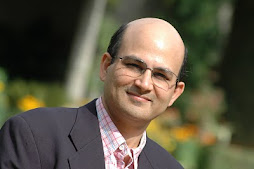
At a workshop organized by CII at Bhopal on March 5, Professor BB Bhattacharya (BBB) [picture below], economist and former VC of JNU, suggested  an interesting distinction – you are still a Bimaru state when, like Bihar, you are seeking special economic packages, and not like MP when you are confident of creating your own destiny.


As is well known, MP’s economic growth in recent years has come from agriculture. It is the country’s leading producer of soybean and pulses and #2 in wheat. The state has won the Krishi Karman award – an award given by the National Food Security Mission to states excelling in foodgrain production - the last three years in a row.

I am still not completely clear about how and why the state has been able to achieve 10+ % growth in agriculture the last three years. While the government of MP credits the growth to improved irrigation, adoption of technology and better farming practices, and optimum utilization of rain-fed areas, media reports refer to a zero-interest loan scheme to farmers, availability of power, and better irrigation coverage.

But, whatever the reason, the state has realized that it can’t depend on growth in agriculture alone for the future development of the state. That’s why it is increasingly looking at industry as the key to future growth.

An Industrial Growth Strategy for MP?

At the workshop, Professor BBB made a few important observations in his opening remarks. The East Asian growth story was as much a story of social development as economic development, and the availability of skilled and educated manpower made the growth story possible. East Asia also became technologically savvy quickly, and rapidly made the transition from being a mere recipient of technology to a creator of technology as well. He therefore underlined the importance of human development and technological capabilities for industrial growth.

Mr. Prabhakar Kadapa, CEO of Avtec, a CK Birla group company that makes engines for the automotive industry observed that his company’s products are becoming more knowledge and technology-intensive. While it has plants in multiple locations, the technology-intensive work that has a higher element of value-added happens in Hosur near Bangalore and not in his older plant in Pithampur near Indore. He estimated that 70% of his future capex would flow into Hosur.

As a participant in the panel, I observed that the East Asian countries had followed a similar trajectory of industrial growth, starting with relatively less complex industries and then graduating to more complex ones. But I wondered aloud whether manufacturing will remain the same going forward, or whether there will be fundamental changes. Some recent developments like the growth of 3D printing [see picture below] and the shift of some manufacturing back to the developed world might point to fundamental changes in the nature and patterns of global manufacturing.

Mr. Prabhakar felt that in spite of these changes there would still be plenty of opportunities in low-cost manufacturing. He felt that manufacturing could make a leap if MP is able to attract one or two big name automotive companies to make the state their hub.

Prof. BBB emphasized the importance of individual companies inserting themselves into global value chains and then striving for continuous improvement to maintain competitiveness. Mr. Sanjay Kirloskar observed that his company’s single biggest recent investment was in 3D printing, and that the 3D printer was allowing dies and moulds to be created rapidly thereby cutting down the overall cycle time of taking new products to the market. He also cautioned that we should change perspective from low-cost to total cost of ownership, and emphasise quality.

I also emphasized the importance of catching the next wave at the right time. MP pretty much missed out on the IT services wave and managed to attract companies like Infosys and TCS too late. Given the slowdown in their businesses, it’s doubtful that their development centres in the state will ever reach a large size.

The final point I made was on last mile connectivity and speed. While MP has undoubtedly made significant progress in building highways connecting the major cities in the state, city and last-mile connectivity remains an issue. The state has the right intent, but there is a need to match the intent with speed of execution as fast response is key to competitiveness.


What the State Government is Doing

The Government of MP has taken the mantra of “Ease of doing business” seriously. At a workshop with industry on March 4, the government explored 150 different possibilities for simplifying permissions and procedures. MP CM Shivraj Chouhan personally spent a good part of the day at this workshop, and reportedly told state bureaucrats not to worry about the few percent of people who will take undue advantage of the simplified processes. Instead, he advised them to focus on the benefits that will accrue from simplification.

Participants in the workshop were appreciative of the government’s efforts but underlined the importance of the government’s industry-friendly approach trickling down to the lowest level of the government. Such a change in approach is reported to have happened in some states like Gujarat. Industries Commissioner Kantha Rao said the government hoped to use technology to overcome any problems at the delivery point.

Mr. Kantha Rao also mentioned that the state is trying to leverage the central government’s policy initiatives – it’s been one of the first states to have its own policies for supporting Electronics Systems Design and Manufacture, and Defence industries. The State also offers one of the best policies for textile units.


Cautions

Professor BBB cited the example of China to warn the state that several advantages that the state enjoys today like availability of land, water and electricity could very rapidly change into constraints if industrial development takes off. Echoing this concern, some of the participants suggested that the state be sensitive to environmental concerns upfront rather than trying to address them later in a corrective mode. One participant suggested that the state should focus on clean energy. But, as he was speaking I recalled President Obama’s travails in trying to support clean energy and wondered whether Madhya Pradesh is quite ready for such challenges.

While there was broad agreement that the state needs to be able to attract higher quality talent to support R&D investments, some participants asked whether MP can hope to attract higher end jobs without making its cities more attractive. Would techies ever consider an Indore or a Bhopal on par with a Bangalore or a Hyderabad?

Another line of discussion centered around what the state can do to promote entrepreneurship. Can it set up incubators to support young entrepreneurs? Mr. Kantha Rao said, quite rightly in my view, that the government is not ideally suited to setting up or running incubators, but could be a catalyst of such initiatives.

Some Concluding Thoughts

India is embarking on a pro-manufacturing policy at a time when manufacturing itself may be on the verge of major changes. While the speed of adoption of new manufacturing technologies is difficult to predict, it is clear that the last generation of technologies itself has made manufacturing much more technology-intensive and most plants today are run by a small core of very highly skilled people. Given  this, it’s an open question how much employment manufacturing can create. Govindraj Ethiraj, Chief Editor of the Ping Network who moderated the discussion told me that a recent McKinsey report predicts a decline even in knowledge-intensive jobs thanks to changes in the way work is done.

Having said that, government policy support will create manufacturing opportunities in some sectors for sure. Defence is one of these, with the government having indicated its preference for products manufactured in India, and its willingness to move away from the earlier public sector centric model of defence production.


But, state-level strategies remain tricky. Should all states try to woo all types of industries? How can states build additional layers of advantage that would make companies find them more attractive as investment destinations? These are some of the big questions to ponder over. 

Sunday, March 1, 2015

Reflections on a trip to Odisha and Rajasthan

I just got back to Indore after a week in Odisha, Delhi and Rajasthan. It was a good trip, and set me thinking on multiple fronts.

Development Debates

One of the big debates in India in recent times has been on what conditions you need to create for investment and development to follow. This trip raised some new issues in this debate as both Odisha and Rajasthan have created high quality roads but not exactly been magnets for investment. You can get from Jodhpur to Jaisalmer, a distance of 285 km, in a little over 4 hours! And this is not even a four-lane highway! The roads between Bhubaneswar, Konark, and Puri are quite decent as well. Contrast this with Bangalore and Mumbai which are, in spite of their creaky infrastructure, getting more crowded by the day! Apparently, human resource availability and other agglomeration benefits outweigh infrastructure!


Of course, it could also be argued that the reason the roads in Odisha and Rajasthan are good is because the states are less economically developed, and hence have less traffic. There’s definitely an element of truth in that as far as Rajasthan is concerned, the traffic was really sparse and consisted of only tourists or army trucks!

One big change that has happened over the last decade is the emergence of new education hubs. Bhubaneswar is one such with a good mix of private and government institutions. Jodhpur is one too – it has an IIT, an AIIMS, a National Law School, to just name a few. But it’s not clear if these locations are able to build any additional levels of advantage thanks to the co-location of these institutions. Instead,  they appear to be operating in their own silos. Unfortunately, the concept of a Meta University promoted by Kapil Sibal to promote collaboration between institutions in cities never took off.

Spots of Tourist Importance

It’s good to see that there has been a conscious effort to control traffic near important monuments. Whether it be at the Sun Temple in Konark, or the Jagannath Temple in Puri, vehicles are stopped some distance away from the actual location. However, this does mean that covering the “last mile” becomes difficult or expensive – a cycle rickshaw from the designated parking place to the Jagannath temple charges Rs. 30, and the distance is just that little bit longer than one would ideally like to walk in the sun. While I appreciate locals getting a livelihood thanks to these traffic restrictions, perhaps these towns should offer an electric shuttle bus service from the parking areas.

However, while traffic is under control, commerce has grown by leaps and bounds. Whether it be the Pandas of the Jagannath Temple or the guides and hawkers in front of the Sun Temple, or itinerant vendors selling everything from soft drinks to beer on the sand dunes, commerce is loud and in your face. And, the Jaisalmer Fort (see picture below) is a living fort, inhabited by more than 4,000 families, so naturally commerce is all around. The most subtle and well-organised commerce is at the privately run Mehrangarh Fort in Jodhpur where the designated route through the Fort takes you through a boutique, a local crafts fair, and two cafes!


East vs. West

While we seem to have picked up the consumerism of the west fast, we haven’t been as adept in picking up some of the western virtues. My visit to Bhubaneswar started with attending the valedictory function of a professional society. Much to my surprise, the function stretched to cover double the time planned. They had too many speakers and these speakers were either not given a clearly indicated duration to speak or the organisers thought it rude to interrupt and tell someone when they had exceeded their time. I noticed a similar phenomenon at the otherwise well-run conclave of the Indore Management Association in February, and at a Rotary jamboree in Indore recently. Maybe this is a Tier-2 city phenomenon, for I see most events in the metros sticking to their schedules!

Entrepreneurship alive and well

It was good to see entrepreneurship alive and kicking. I was particularly impressed by Manvar Resort, approximately halfway on the road from Jodhpur to Jaisalmer. Just off the highway, it’s a lovely green resort, well-mantained, and served delicious aloo parathas. The owner is from the family that is a major landowner in the area, but full marks to him for the aesthetic ambience and excellent service of the resort.


Varun Arya, an IIT Delhi and IIM Ahmedabad alumnus, set up the Aravali Institute of Management in Jodhpur over a decade ago. His endeavor has been to bring the IIMA education philosophy to students of that part of Rajasthan. Along the way, he has had to weather many storms – with different agencies of the central and state governments. One result of these ups and downs has been that he has had to suspend his education programmes for some time till regulatory issues are addressed.
In the meantime, he has converted what was barren and saline land on the Jodhpur-Jaipur highway into a mini-oasis. He has built 12 lakes on this land, and all of them still have plenty of water from the last monsoon. Thanks to the lakes, the campus is cooler by a few degrees.


Varun has done several interesting things. All construction on campus is by local labour. He has got special equipment fabricated so that he has to rely minimally on transporting things from Jodhpur. They grow only trees that help other vegetation grow, and have stopped growing some plants that are common in the area but in reality “poisonous” for other vegetation. The boundary walls allow water to flow in during the monsoon to replenish the lakes, and also allow excess water to flow out. The classrooms are minimalist but functional. It’s quite a place!

Tailpiece

The last place I expected to see empty beer bottles strewn around was on the sand dunes of Jaisalmer. The Swachha Bharat campaign has its work cut out – all the way from the beaches to the deserts!


Wednesday, February 25, 2015

Remembering Anand Ramachandran

I recently lost a good friend of mine whom I knew since my school days. Looking back at his life set me thinking about a few things.

Early Days


Anand Ramachandran was a voracious reader ever since I knew him. But everyday fiction was not for him. He read Philosophy and Mathematics, and studied these as well.

Mathematics was one of his abiding interests from the time I first knew him. Like some others, I think he was first influenced by the logic and precision of Maths. I can’t recall the details but he used to mention challenging problems in Algebra and Real Analysis when he was 15 and I was 17! At that time, he wanted to do a good first degree in Mathematics and then go on to do a PhD. In this, he was definitely influenced by his elder brother who did a PhD in Maths in the US and went on to be a faculty member there.

Anand spurned advice from others to be practical and do Engineering, and decided to do Maths in a college instead. But, by the early 1980s, college education in India had started to decline in quality. Anand got into Vivekananda College, a well-regarded college in Madras, but he found the syllabus and teaching pedestrian. He was particularly vexed by the need to pass exams which he didn’t find challenging, and which involved swotting if you wanted to get outstanding marks. I can recall his getting really frustrated by the fact that he had to do this humdrum stuff when there were so many more interesting problems waiting to be solved. And, friends kept telling him about the importance of exam marks to get admission to a “good” MSc programme. That only made things worse as did the fact that his brother had done an MSc from IIT Madras before going to the US. I am not sure of this but I think he finally enrolled in an MSc at Vivekananda College itself.

Change of Interests

But, Anand’s interests soon broadened into Philosophy and Linguistics. Within a couple of years, he had enrolled in Deccan College at Pune which had a good Linguistics Department, and started working with Probal Dasgupta (see photo below). Anand found the academic and social environment of Pune conducive to his pursuits and interests, and this became a city where he would not only spend time but make lasting friendships.


Anand chafed against exams wherever he went and Deccan College was no exception. Yet, he not only managed to study there but land himself a scholarship to MIT. By then he had become a fan of Noam Chomsky (below). While entering MIT was probably his personal high point, his stay there was tempestuous.


I don’t recall the details, but he was asked to leave the PhD programme. Anand told me that the Dean agreed he had been treated unfairly but he had to leave nevertheless. From what I understood, his friendship with Chomsky harmed rather then helped him, and he got caught in the crossfire of vicious academic politics. It doesn’t take much imagination to see that Anand’s lack of tact and direct talking would not have been of great help in this episode.

This experience was tough for Anand psychologically and left him with bitter feelings about academia. While he didn’t expect much from Indian academia, he felt let down by US academia as well. But this was not the culmination of his love-hate relationship with academia. More about that later!

Music takes him on a different path

One of Anand’s other passions in life was music, and he remained a true fan of good western classical music for as long as I knew him. While at Pune, he had become friends with a European man who had, if I remember right, been a member of the Osho Ashram. This individual had developed very high quality audio speakers and was making a business out of selling these hand-crafted speakers. Once he recovered from the MIT fiasco, Anand started selling these Cadence speakers. Prospective customers were rich, well-heeled connoisseurs of western classical music. With his erudition, it was not difficult for Anand to become friends with many of these individuals, friendships that became a big support for the rest of his life.

Anand started selling the speakers in Pune, but later moved to Bangalore where he even set up a studio that acted as a listening room to experience the quality of the speakers. But, given his intellectual interests, it was impossible for Anand to remain in sales, and he got interested in academic pursuits again.

New Academic Interests

By now, his interests had shifted to Statistics and Finance. I have forgotten how this came about, but he eventually became a consultant to Cranes Software, a company that was developing and selling statistics tools. Not surprisingly, he again came into conflict with some of the academic consultants to the company who questioned his lack of certified expertise in the form of degrees.

Anand returned to academics a few years later to do a Masters degree in Mathematical Finance at York University. Anand really took to the UK, and found it conducive to his temperament and interests. He struggled to finish the degree because he again felt somewhat straitjacketed, but finish it he did, and he stayed on to do a PhD as well.

His PhD was marred by an acute infection that affected the functioning of his heart and almost killed him. But Anand survived. He always gave a good deal of credit to the UK’s National Health Service (NHS) and the care he received from them. The NHS is often pilloried for being inefficient and slow, but Anand was very impressed by their care for him.

Anand finally finished his PhD a couple of years ago at the age of 45+. He had to leave the UK, but found a job with a start-up in Singapore.

Anand remained a free spirit till the end. He couldn’t stand authority and got into conflicts with people in positions of authority throughout his life, even in the start-up! He hated other forms of rigidity as well, particularly the regimented nature of exams. But it is a tribute to his doggedness that he persevered to complete his PhD.

Some Concluding Thoughts

I believe that with Anand’s quality of thinking and academic interests, he would have made a really good professor if only our academic system were more flexible. Had he the good fortune to be exposed to a classics tripos at Cambridge or a liberal arts programme at a top US university, he would have done really well. I hope things change fast so that we don’t lose more Anands. I see a sliver of hope in some of the new programmes that are coming up in India like the Liberal Arts programme at Ashoka University.

Anand was an aesthete. This was apparent from the things he liked throughout his life – Mathematics, Classical Music, Yoga, well-written books. While he could get very angry about some things like stubborn bureaucracies and the narrow mindedness of Indian academia, he was himself non-violent.
One thing I really admired about Anand was his perseverance. At a time when many people are thinking about hanging up their boots, Anand was doing his PhD and thinking about what he should do next. He was keen to settle down in the UK, but alas that was not to be.

In the last few years, Anand had mixed feelings about me, since he now saw me as an establishment figure with authority. I think he felt, like some other friends did in the past, that I tried to run with the hares and hunt with the hounds at the same time. Anand is one of many mavericks I have known, who were attracted towards me at some point, but later drifted apart. Luckily I have maintained links with many of these friends thanks to Kajoli who shares their free spirit. That happened with Anand too – she remained in much closer touch with him than I did.  

Anand Ramachandran, Rest in Peace. A tribute to Anand would be incomplete without my great appreciation for Anand’s sister Hamsini who supported him through thick and thin and helped him sustain his dreams.

[These are my personal views and based on my personal recollections. Sorry for any errors.]


Saturday, January 31, 2015

Re-discovering Bihar

My last visit to Bihar was more than 20 years ago, so I was curious to see how the state has changed since then. The sense of anticipation was high as I now look forward to a prolonged interaction with the state – as Director of IIM Indore, I will be the mentor-director for the new IIM to be set up in Bihar.

Patna: Improved Infrastructure, but still very crowded

I had read about runway length and clearance constraints impeding flights in and out of Patna, and the reality of that was clear as we landed. Unlike other airports across the country that have expanded, got new terminal buildings, aerobridges, etc., Patna airport looked pretty much the same as I remember it from all those years ago. Looking at it closely I realized that it is a narrow rectangular strip with trees at the end, and no scope at all for expansion. The apron can’t accommodate more than a few aircraft, so clearly Bihar’s capital will need a new airport very soon.

All Indian cities have become more crowded over time, but Patna seems to be bursting at its seams. There have been infrastructural improvements in terms of flyovers and bridges, but the city still looks very crowded. Of course, like other cities, Patna has some areas that are sprawling and reminiscent of an earlier age – particularly the areas where the secretariat is located and where minsters and senior officers stay. But these look particularly incongruous in Patna because of the congestion in the rest of the city.

IIT Patna’s New “Vertical” Campus

We set off straight from the airport to the suburb of Bihta about 35 km from Patna where the new campus of IIT Patna is coming up. On the way, we had to negotiate significant traffic jams at Danapur as trucks heading to the railway yard had blocked much of the road. Further down, we passed the Bihta Air Force Base before arriving in Bihta town, and crossed the railway track across a new-looking bridge to get to the IIT campus on the other side. All in all, it took about 75 minutes to get from the airport to Bihta, and providing quick access to the city will become critical in the years ahead unless Bihta Air Force base gets converted into the new Patna airport as has been proposed by some.

The IIT campus is flanked by a brand new Hero Cycles plant, (apparently set up in order to meet the enhanced demand for bicycles in Bihar thanks to the state government’s scheme to provide cycles to girl students in government schools – more about this below) and a private educational institution with an imposing name – NSIT. Across the road is an HPCL oil storage facility.

The IIT Campus has a massive administrative building, a few academic buildings, 4 blocks of 8-storeyed hostels that will accommodate about 1,000 students, and multi-storeyed accommodation for faculty and staff. All these buildings are at an advanced stage of construction and should be completed in the next few months. A lecture hall complex and other infrastructure will come at a later stage. Personally, I would have preferred to see the lecture hall complex ready now rather than the admin block, but I guess they had to make some choices!


Some friends made critical comments when I posted photos of this IIT campus on Facebook, saying that the campus looks more like an apartment complex. I believe such criticism is unfair. Given the scarcity of land, we need to re-think the way we design academic campuses. Hostels and residential facilities have to go vertical, and scarce horizontal spaces can be used primarily for playfields and gardens. Clever design can make the campus seems spacious, green and open. Horizontal sprawl will have to be a thing of the past! If you want to see how this can be done, take a look at Hong Kong University of Science and Technology, the beautiful new university built in Clearwater Bay about 25 years ago.

Bihar has been an exporter of students to other states for as long as I can remember, but things are beginning to change now as high quality education comes to the state. 2 central universities, an IIT, IIIT, and an NIT are just some of the central institutions being set up. Besides, there are new state-supported institutions as well such as the Chandragupt Institute of Management at Patna (CIMP). This institute is presently located in a temporary premises in the heart of Patna as it awaits its permanent home that is under construction.

Gaya and Bodh Gaya

On Day 2 of our visit, we set off on the 115 km trudge from Patna to Gaya. The road is narrow (2-lanes) but otherwise in good shape, and the sides of the road are green with fields. It took close to two-and-a-half hours to reach the Circuit House at Gaya. I was pleasantly surprised to find the Circuit House spic-and-span, in much better shape than circuit houses I have seen in some other states.
We quickly moved on to the adjoining town of Bodh Gaya which has a very festive look. The roads are lined with flags, many countries have built monasteries, and hotels and lodging houses are all over. Buddhist pilgrims from all over the world throng this town where the Buddha is believed to have attained enlightenment under a Bodhi tree. The Maha Bodhi temple had a festive air as well, as the day we visited was the concluding day of a week-long festival.

I felt a little awkward at the temple given the circumstances of our visit. I had been planning for years to visit all the important Buddhist pilgrimage sites, to re-trace the path of the Buddha. But it took an “official” visit to set up a new IIM to finally take me there!


The Mahabodhi temple is beautifully maintained with clean approaches, marble flooring and orderly flow of pilgrims. One thing that did surprise me though was the small number of Indian visitors – for a moment, one could easily imagine that one was in a different part of Asia!

Gaya has a cute airport, designed to meet the needs of international travellers visiting Bodh Gaya. During the tourist season, international flights connect Bodh Gaya to a number of Asian countries that have significant Buddhist populations. The only domestic connection is to Delhi and Varanasi (Air India) and this too doesn’t run the whole year around. But Gaya is on the main railway line from Delhi to Howrah, and is served by three Rajdhani Expresses apart from a host of other trains.


Gaya has a significant military establishment, a new Officers Training Academy, built on the premises of the erstwhile Army Supply Corps North Centre that was re-located to Bangalore a few years ago.

A Useful Learning Experience

On this trip I had the privilege of accompanying Shri Amarjeet Sinha, Additional Secretary in the Ministry of HRD, Government of India. Mr. Sinha has spent most of his career in Health and Education. Thanks to him, I was able to understand the socio-economic development of Bihar in a historic perspective ranging from the enduring impact of the Permanent Settlement on land use in the state to the recent improvement in some of its human development indicators.


I learnt that every girl student in class 9-12 in Bihar gets a free bicycle, uniform, and a scholarship, amounting to a total of more than Rs. 5,000. The bicycle, in particular, has resulted in a sharp reduction in school dropouts as girls are now able to reach school quickly and without significant cost. Thousands of girls have been trained in self-defence, in judo and karate. I was impressed to hear about a scheme of the Bihar government whereby young women from the Maha Dalit communities have been hired as catalysts (called Vikas Mitra = “friend of development”) to get girls in their communities to attend school, give remedial classes and improve adult literacy. All of this was quite impressive, and I look forward to learning more about these developments as I spend more time in Bihar!


[The views expressed here are the personal views of the author.]

Saturday, January 17, 2015

Deepakk Goyal and Passion Greens: The Future of Indian Farming?

This was a few years ago at IIM Bangalore. I was looking for some articulate IIMB alumni who could speak to our students to give them an alternate perspective on careers. One name that quickly came to mind was that of Deepakk Goyal. I knew he had done a few different things – undergraduate studies in the United States, a longish stint in his family’s trading business in Kolkata, a late MBA at IIMB where he was one of our mature students (and unlike almost all the others, already married with kids), and then a stint with private equity.

But I was totally unprepared for what was to follow. When I got through to Deepakk on the phone, he told me that he had become a farmer in Central India, near Indore. And, that farming was his new passion, what he would be following in the years to come.

Deepakk didn’t figure in my thinking for some time thereafter till I moved to Indore in January 2014. I was trying to discover any connections and contacts in the Malwa region and then I suddenly remembered Deepakk. We spoke soon after I moved to Indore, but didn’t actually meet till the Global Investors’ Summit in October.

Deepakk’s Farm

I had somehow got it into my head that Deepakk is into organic farming. Maybe because I couldn’t imagine him doing anything humdrum and, from all reports, organic farming is very challenging though also remunerative. When we finally visited him at the end of December, I realized that I was right about Deepakk doing something far from the ordinary, only it doesn’t have to be organic farming for it to be exciting.

The topography can change rapidly in these parts of MP. As we drove down the Khandwa Road, past the construction site of the new IIT at Simrol, and across the short Ghat section a little further down, accompanied for stretches by the huge pipeline carrying Narmada water, there are long green stretches. You actually cross the Narmada at some point. The Narmada is one of the few Indian rivers to retain its glory as we found to our delight during our earlier travels in MP to places like Maheshwar and Omkareshwar. Seeing the fertile stretches in the vicinity of the Narmada, I expected to see Deepakk farming well-irrigated land.

But, we were soon in for another surprise. As we waited by the side of the road a few kilometers beyond Sanawad town for Deepakk’s wife Shilpa who was following us some distance behind on the road from Indore, we saw dry, barren land. We turned left off the highway and followed Shilpa on a dusty and winding road till we reached Deepakk’s farm in village Gunjari.


And, what did we see here? A small farmhouse near the gate with a few tiny rooms on the ground floor and a kitchen and covered verandah space on the first floor. Rows of pomegranate plants neatly running away on a large expanse in front of the farmhouse. And a huge open tank of water close to the farmhouse.


The Indian Farmer: A Major Risk Taker

Most people who have grown up in cities have a romantic notion of farming, shaped by movies and books. Indian folklore shows the Indian farmer anxiously waiting for the monsoon rains, benefiting either from the monsoon’s bounty or ruined by its failure. The farming story has typical villains like the usurious moneylender waiting for the crop to fail so that he can possess the farmer’s land.


In recent years, the rash of farmer suicides in Andhra Pradesh and Vidharbha has made many of us more aware of the complexities of farming. Higher returns have induced farmers to embrace cash crops, but the risks have also increased as investments are higher and farmers become more dependent on credit to finance this investment.

I remember someone once telling me that the biggest risk taker in our country is the Indian farmer. This was in the context of Indian entrepreneurs being risk-averse!

I can’t recall the exact content of his thesis, but one of my seniors in the doctoral programme at IIM Ahmedabad, SJ Phansalkar studied the risk-taking behavior of Indian farmers. Phansalkar himself went on to become a distinguished academic and author, and in recent years has worked for the Tata Trusts.

The Challenges of Farming

Well, all this esoteric discussion on risk-taking in farming became live and real when Deepakk told us about the challenges he has faced in the last few years. Several things can go wrong – insects, pests, animals, fungi, diseases of various kinds – any of these can unexpectedly ruin a crop. Market prices are unpredictable as they depend on demand and supply in a particular year across markets.

But Deepakk has learnt, even if the hard way, how to overcome these adversities. Some things I took away from our visit – each crop has its own idiosyncrasies and hence understanding a particular crop in all its details across cycles becomes important; expertise is fragmented and often tainted by the commercial interests of different sellers who are only interested in hawking their products; yet, there is scope for experimentation if done with careful monitoring.


Deepakk’s farm reminded me of what I saw on my visits to Israel – healthy looking plants growing in a barren landscape. In fact, Deepakk is very much like an Israeli farmer, totally committed to what he is doing, using technology intensively but thoughtfully, and fiercely protective of his efforts. He uses drip irrigation and soluble fertilisers to control the use of water and at the same time ensure that the plants get the nutrients they deserve.

The Future of Indian Agriculture

Deepakk’s advantage is his ability to invest capital and use technology and at the same time manage the risks involved. What we got at his farm was a glimpse of what Indian agriculture could look like in the future. It’s romantic, but in a different way from what you would see in an old Hindi film. What’s not clear in my mind is how the transition from the old to the new will happen…and how we will manage the social upheavals that are bound to accompany such a change.


Saturday, January 3, 2015

Reflections on Paths Not Taken

The other day, someone asked me why and how I became interested in the pharmaceutical industry. This set me thinking about some of the other interests I had over time, the ones I didn’t pursue. This blog is dedicated to two of the paths not taken.

My Tryst with Biology

I have always had an interest in modern biology. We had a reasonably good Biology teacher in school, Mr. David, who explained the basics of modern genetics well. But, more importantly, somewhere towards the end of my school years, the British Council screened the multiple part BBC series on Bronowski’s Ascent of Man. I still have some visual memories of the episode on genetics where Bronowski explained Mendel’s experiments.


Sometime during the same period, Madras played host to an international conference on Molecular Biology where there were a number of prominent international scholars speaking. I attended their talks though I didn’t understand much of what they were saying.

One of my school friends, Vimal Jain, had a strong interest in medicine and hoped to do research on cancer one day. Under his influence, I started reading about cancer as well and even contemplated doing medicine. I visited CMC Vellore to find out more about this possibility but was discouraged by the miniscule number of places available and the intense competition for these.

During this period, I read several interesting books, including one on Josef Issels, a German doctor, who proposed alternate therapies for cancer that involved identifying and removing all other potential sources of infection including bad teeth! I just did a quick internet search and found that Issels’ treatment is still alive though it remains as controversial as it was during Issels’ lifetime, with some considering it ineffective, and others as outright quackery.


While my parents didn’t discourage me from studying Biology, or from reading about cancer research,  I can’t recall their active encouragement either! But, my interest in Biology didn’t go away, and I got a chance to pursue it again when I was studying Physics at IIT Kanpur.

In our final year, in fact in our final semester (January-April 1986), I attended a course which was titled (I hope I remember this correctly) Foundations of Modern Biology. It was taught by Prof. S. Ranganathan, a brilliant biochemist, who had done a post-doc with one of the outstanding figures in Organic Synthesis, Prof. Woordward, at Harvard in the 1960s. Ranga brought RNA and DNA to life in a dramatic way. I now realize that this was a state-of-the-art course at that time, and Ranga was really current with the interface between Chemistry and Biology.


As an aside, IITK had some incredible faculty in the Chemistry department in the 1970s and 1980s including CNR Rao, D. Balasubramanian, P.T. Narasimhan, M.V. George and Ranga himself. Chemists in India recently celebrated Ranga’s 80th birthday and he was conferred with an Outstanding Teacher Award.

This fascination with Modern Biology has remained with me over the years, and is one of the reasons I have been interested in the Biology-driven pharmaceutical industry.

And another with Political Science

During the year (1986-87) I spent at Stanford doing my Master’s, I was drawn to other subjects. As Indian institutions go, IIT Kanpur (where I did my undergraduate degree) had an inclusive curriculum. Though I majored in Physics, I was able to do courses in Art, Sociology, Economics and Philosophy as part of the Humanities and Social Sciences requirement. But these seemed really inadequate when I saw the Course catalogue at Stanford. My urge to do other courses increased further when I spoke to some of the undergraduate students there.

So, I used the flexible credits that I had to attend a Political Science course titled “Political Economy of Development.” It was taught by a really articulate and knowledgeable professor called Terry Karl. I really enjoyed her classes and ploughed through the huge books we had to read as part of the class readings including Huntington’s Political Order in Changing Societies and Barrington Moore’s Dictatorship and Democracy.


Professor Karl was more interested in Latin America than Asia, but she encouraged me to work on a term paper on India, and I looked at the Punjab conflict (which was prominent at that time) with a Political Science lens. I still have the paper I wrote, and I must say it wasn’t a bad paper at all even if it was somewhat simplistic.

Another source of encouragement during the course was the teaching assistant, Alison Brysk. When I first saw the size of the readings for the course, I was really scared, so during the first tutorial session I asked Alison how they expected us to read so much. I still remember her response: one of the things we expect you to learn from the course is how to read efficiently (or words to that effect!).


After the experience of this course, I seriously thought about applying to a PhD programme in Political Science. If I remember right, I even discussed this with Professor Karl, and she was quite encouraging. But, I finally chickened out, because I really didn’t know what I would be able to do with a PhD in Political Science in India. As I was committed to returning to and working in India, I decided that this just wasn’t a good idea.

But I retain my interest in Political Science and what we did in Political Science 114K to this day. I have been lucky to have a chance to teach courses that build on this interest. I started teaching a course on Business, Government, and Society with Rajeev Gowda about a decade ago, and have taught this course off and on, including this year at IIM Indore to our IPM students.

Tailpiece


I am lucky that I have been able to keep alive my interest in Modern Biology and Political Science even though I don’t pursue them as the principal tracks of my career. I am not an expert in either but you don’t need to be an expert to enjoy studying these subjects!

[The views expressed here are the personal views of the author.]

Tuesday, December 30, 2014

Why can't we develop breakthrough drugs from India? Lessons from the Vertex Story

Why can’t India create new breakthrough drugs? Or, at a broader level, what prevents India and Indian firms from undertaking radical innovation? These are questions that have been on my mind for several years. I tried to answer these questions at a system-level in my book From Jugaad to Systematic Innovation: The Challenge for India. One of our doctoral students, Pavan Soni,  is currently engaged with these questions at the organizational level in his doctoral work on building capabilities for radical innovation in resource-scarce environments.

These questions came alive again as I read Barry Werth’s gripping account of the founding and early years of Vertex Pharmaceuticals: The Billion Dollar Molecule: One Company’s Quest for the Perfect Drug. Vertex was founded over twenty years ago, so this is not a new book, but the story nevertheless gives an insight into what it takes to develop new drugs. Incidentally, in its first four years, Vertex did not manage to develop a drug though it made progress with some candidates and gave up on others.


Key Features of the Vertex Story

I found several interesting things about the Vertex story:

Distinctive Philosophy: Founder and CEO Joshua Boger played a fundamental role in shaping Vertex. He worked for several years in senior scientific positions at Merck, one of the top research-driven pharma companies, before founding Vertex. He believed that the time had come to scientifically design molecules rather than use the traditional approach of screening hundreds of compounds to check them for their potential therapeutic activity. He felt that a small company devoted to this new approach was more likely to be successful than a traditional pharma company which had a dominant logic based on screening. This led him to take the risk of leaving Merck in spite of a very successful career in the company.


The Role of the Scientific Advisory Board: While Boger put together a stellar Scientific Advisory Board, Werth’s account suggests that, at least in the case of Vertex, the SAB contributed more towards the company’s external image than the company’s own scientific work. In fact, early on, Vertex “fired” one of the high profile SAB members, Harvard Professor Stuart Schreiber, because it began to see a conflict of interest with Schreiber’s own work and felt that Schreiber was not careful enough about keeping the company’s “secrets.” Schreiber went on to stay a step ahead of Vertex in many of its early scientific quests.

Ability to sell ideas: In high technology and discovery-driven fields, technologists are often the best salesmen. Boger played the sales and marketing role to a “T”, whether it was striking deals with established drug companies like Japan’s Chugai or Burroughs Wellcome, convincing investors to participate in Vertex’s IPO or managing gatekeepers at scientific journals like Nature.

Role of the CEO: But, Boger’s contribution went well beyond marketing. He played a key role in deciding which molecules to work on (e.g. the choice of the “re-design” of FK-306, an established immunosuppressant, as Vertex’s first project), attracting top talent to the company, restoring motivational levels when spirits sagged, and pivoting to a different molecule when things didn’t work out. I was amazed by his self-confidence and unwavering drive (the book gives no evidence of any self-doubt at any stage!). Boger also integrated the discovery effort across disciplinary boundaries, a tricky task when there are well-established antagonisms between disciplines, and you are working with a group of high achievers with huge egos.

People and Network: Vertex benefited from the networks of its board members (key to raising the Chugai investment), ability to raise money at regular intervals (including through an IPO capitalizing on a short-lived bull run in biotech stocks) and the incredibly hard work of its early employees who worked for days without a break in order to stay ahead and have a story to tell.

Intense scientific competition helped as well as Vertex scientists were continuously under pressure from competitors like Schreiber as to who would take the lead. Information about the latest milestones achieved in university laboratories filtered into the company through informal networks and rumours acted as a spur for development.

Vertex was able to assemble a team of all the specialists needed to work on drug development – chemists, biologists, crystallographers, spectroscopists, etc., all of the highest caliber, either from top pharmaceutical companies or leading research groups. Creative abrasion was expected to help generate the best ideas. The main retention tool apart from the thrill of developing a new drug was stock options.

At least in the first four years of Vertex, drug development never happened in the structured, rational way that Boger envisaged. While that was the holy grail, many milestones were reached through intelligent guesses, trial and error, and sheer luck. Yet, throughout, the effort was to get there.

Why can’t we have a Vertex from India?

Let’s fast forward to today. Which elements of Vertex’s fast evolution could be replicated in India, and which would be inimitable?

With enough money, it should be possible to get skilled people for the technical tasks, and the equipment required to do these tasks. But I am not sure that we have the kind of people who Boger was able to attract to Vertex: scientists with the deep expertise at the frontier of the field combined with the original thinking required to make breakthrough discoveries, and the strong aspiration to do so. Managing such prima donnas as a group is not an easy task either.

Also, certain elements of the Vertex model simply don’t exist in India. In most fields and sub-disciplines, there is no Harvard equivalent that is pursuing the cutting edge of research and can provide competitive stimuli or research inputs to a young start-up. The gap between academia and industry is often lamented in India, and this gap affects the development of “high tech” industry the most. Email and the internet are no substitute for the flow of information across organizational boundaries thanks to informal professional networks.

And India’s investors and capital markets may not have the risk appetite and be sophisticated enough to make the frequent investments that would keep a company like Vertex afloat. In its first four years, apart from the initial funding, Vertex raised money from Chugai and also completed an IPO. Its only now, and that too in a relatively established space like e-commerce, that we are seeing multiple rounds of funding in quick succession.

I can’t imagine we have too many Boger equivalents who are able to straddle “high science,” technology and business.  The only person who comes to mind is Vijay Chandru of Strand Life Sciences.

Conclusion

It’s going to be difficult to create Vertex-like companies out of India. But there are a few things we can do to help the process, at least on the supply side.

We need to scale up what the Department of Biotechnology has supported reasonably well over the years – creation of a critical mass of highly qualified scientists and technologists in the areas of modern Biology and related fields. We can also expose more of our most talented scientists to the excitement of entrepreneurship and business through carefully crafted workshops – e.g. NSRCEL at IIMB had run a couple of workshops for young scientists/doctoral students at NCBS and IISc on the Business of Science, and this can be replicated elsewhere. Good incubators – like the Venture Centre at NCL Pune – would make getting off the ground easier.