Saturday, January 17, 2015

Deepakk Goyal and Passion Greens: The Future of Indian Farming?

This was a few years ago at IIM Bangalore. I was looking for some articulate IIMB alumni who could speak to our students to give them an alternate perspective on careers. One name that quickly came to mind was that of Deepakk Goyal. I knew he had done a few different things – undergraduate studies in the United States, a longish stint in his family’s trading business in Kolkata, a late MBA at IIMB where he was one of our mature students (and unlike almost all the others, already married with kids), and then a stint with private equity.

But I was totally unprepared for what was to follow. When I got through to Deepakk on the phone, he told me that he had become a farmer in Central India, near Indore. And, that farming was his new passion, what he would be following in the years to come.

Deepakk didn’t figure in my thinking for some time thereafter till I moved to Indore in January 2014. I was trying to discover any connections and contacts in the Malwa region and then I suddenly remembered Deepakk. We spoke soon after I moved to Indore, but didn’t actually meet till the Global Investors’ Summit in October.

Deepakk’s Farm

I had somehow got it into my head that Deepakk is into organic farming. Maybe because I couldn’t imagine him doing anything humdrum and, from all reports, organic farming is very challenging though also remunerative. When we finally visited him at the end of December, I realized that I was right about Deepakk doing something far from the ordinary, only it doesn’t have to be organic farming for it to be exciting.

The topography can change rapidly in these parts of MP. As we drove down the Khandwa Road, past the construction site of the new IIT at Simrol, and across the short Ghat section a little further down, accompanied for stretches by the huge pipeline carrying Narmada water, there are long green stretches. You actually cross the Narmada at some point. The Narmada is one of the few Indian rivers to retain its glory as we found to our delight during our earlier travels in MP to places like Maheshwar and Omkareshwar. Seeing the fertile stretches in the vicinity of the Narmada, I expected to see Deepakk farming well-irrigated land.

But, we were soon in for another surprise. As we waited by the side of the road a few kilometers beyond Sanawad town for Deepakk’s wife Shilpa who was following us some distance behind on the road from Indore, we saw dry, barren land. We turned left off the highway and followed Shilpa on a dusty and winding road till we reached Deepakk’s farm in village Gunjari.


And, what did we see here? A small farmhouse near the gate with a few tiny rooms on the ground floor and a kitchen and covered verandah space on the first floor. Rows of pomegranate plants neatly running away on a large expanse in front of the farmhouse. And a huge open tank of water close to the farmhouse.


The Indian Farmer: A Major Risk Taker

Most people who have grown up in cities have a romantic notion of farming, shaped by movies and books. Indian folklore shows the Indian farmer anxiously waiting for the monsoon rains, benefiting either from the monsoon’s bounty or ruined by its failure. The farming story has typical villains like the usurious moneylender waiting for the crop to fail so that he can possess the farmer’s land.


In recent years, the rash of farmer suicides in Andhra Pradesh and Vidharbha has made many of us more aware of the complexities of farming. Higher returns have induced farmers to embrace cash crops, but the risks have also increased as investments are higher and farmers become more dependent on credit to finance this investment.

I remember someone once telling me that the biggest risk taker in our country is the Indian farmer. This was in the context of Indian entrepreneurs being risk-averse!

I can’t recall the exact content of his thesis, but one of my seniors in the doctoral programme at IIM Ahmedabad, SJ Phansalkar studied the risk-taking behavior of Indian farmers. Phansalkar himself went on to become a distinguished academic and author, and in recent years has worked for the Tata Trusts.

The Challenges of Farming

Well, all this esoteric discussion on risk-taking in farming became live and real when Deepakk told us about the challenges he has faced in the last few years. Several things can go wrong – insects, pests, animals, fungi, diseases of various kinds – any of these can unexpectedly ruin a crop. Market prices are unpredictable as they depend on demand and supply in a particular year across markets.

But Deepakk has learnt, even if the hard way, how to overcome these adversities. Some things I took away from our visit – each crop has its own idiosyncrasies and hence understanding a particular crop in all its details across cycles becomes important; expertise is fragmented and often tainted by the commercial interests of different sellers who are only interested in hawking their products; yet, there is scope for experimentation if done with careful monitoring.


Deepakk’s farm reminded me of what I saw on my visits to Israel – healthy looking plants growing in a barren landscape. In fact, Deepakk is very much like an Israeli farmer, totally committed to what he is doing, using technology intensively but thoughtfully, and fiercely protective of his efforts. He uses drip irrigation and soluble fertilisers to control the use of water and at the same time ensure that the plants get the nutrients they deserve.

The Future of Indian Agriculture

Deepakk’s advantage is his ability to invest capital and use technology and at the same time manage the risks involved. What we got at his farm was a glimpse of what Indian agriculture could look like in the future. It’s romantic, but in a different way from what you would see in an old Hindi film. What’s not clear in my mind is how the transition from the old to the new will happen…and how we will manage the social upheavals that are bound to accompany such a change.


Saturday, January 3, 2015

Reflections on Paths Not Taken

The other day, someone asked me why and how I became interested in the pharmaceutical industry. This set me thinking about some of the other interests I had over time, the ones I didn’t pursue. This blog is dedicated to two of the paths not taken.

My Tryst with Biology

I have always had an interest in modern biology. We had a reasonably good Biology teacher in school, Mr. David, who explained the basics of modern genetics well. But, more importantly, somewhere towards the end of my school years, the British Council screened the multiple part BBC series on Bronowski’s Ascent of Man. I still have some visual memories of the episode on genetics where Bronowski explained Mendel’s experiments.


Sometime during the same period, Madras played host to an international conference on Molecular Biology where there were a number of prominent international scholars speaking. I attended their talks though I didn’t understand much of what they were saying.

One of my school friends, Vimal Jain, had a strong interest in medicine and hoped to do research on cancer one day. Under his influence, I started reading about cancer as well and even contemplated doing medicine. I visited CMC Vellore to find out more about this possibility but was discouraged by the miniscule number of places available and the intense competition for these.

During this period, I read several interesting books, including one on Josef Issels, a German doctor, who proposed alternate therapies for cancer that involved identifying and removing all other potential sources of infection including bad teeth! I just did a quick internet search and found that Issels’ treatment is still alive though it remains as controversial as it was during Issels’ lifetime, with some considering it ineffective, and others as outright quackery.


While my parents didn’t discourage me from studying Biology, or from reading about cancer research,  I can’t recall their active encouragement either! But, my interest in Biology didn’t go away, and I got a chance to pursue it again when I was studying Physics at IIT Kanpur.

In our final year, in fact in our final semester (January-April 1986), I attended a course which was titled (I hope I remember this correctly) Foundations of Modern Biology. It was taught by Prof. S. Ranganathan, a brilliant biochemist, who had done a post-doc with one of the outstanding figures in Organic Synthesis, Prof. Woordward, at Harvard in the 1960s. Ranga brought RNA and DNA to life in a dramatic way. I now realize that this was a state-of-the-art course at that time, and Ranga was really current with the interface between Chemistry and Biology.


As an aside, IITK had some incredible faculty in the Chemistry department in the 1970s and 1980s including CNR Rao, D. Balasubramanian, P.T. Narasimhan, M.V. George and Ranga himself. Chemists in India recently celebrated Ranga’s 80th birthday and he was conferred with an Outstanding Teacher Award.

This fascination with Modern Biology has remained with me over the years, and is one of the reasons I have been interested in the Biology-driven pharmaceutical industry.

And another with Political Science

During the year (1986-87) I spent at Stanford doing my Master’s, I was drawn to other subjects. As Indian institutions go, IIT Kanpur (where I did my undergraduate degree) had an inclusive curriculum. Though I majored in Physics, I was able to do courses in Art, Sociology, Economics and Philosophy as part of the Humanities and Social Sciences requirement. But these seemed really inadequate when I saw the Course catalogue at Stanford. My urge to do other courses increased further when I spoke to some of the undergraduate students there.

So, I used the flexible credits that I had to attend a Political Science course titled “Political Economy of Development.” It was taught by a really articulate and knowledgeable professor called Terry Karl. I really enjoyed her classes and ploughed through the huge books we had to read as part of the class readings including Huntington’s Political Order in Changing Societies and Barrington Moore’s Dictatorship and Democracy.


Professor Karl was more interested in Latin America than Asia, but she encouraged me to work on a term paper on India, and I looked at the Punjab conflict (which was prominent at that time) with a Political Science lens. I still have the paper I wrote, and I must say it wasn’t a bad paper at all even if it was somewhat simplistic.

Another source of encouragement during the course was the teaching assistant, Alison Brysk. When I first saw the size of the readings for the course, I was really scared, so during the first tutorial session I asked Alison how they expected us to read so much. I still remember her response: one of the things we expect you to learn from the course is how to read efficiently (or words to that effect!).


After the experience of this course, I seriously thought about applying to a PhD programme in Political Science. If I remember right, I even discussed this with Professor Karl, and she was quite encouraging. But, I finally chickened out, because I really didn’t know what I would be able to do with a PhD in Political Science in India. As I was committed to returning to and working in India, I decided that this just wasn’t a good idea.

But I retain my interest in Political Science and what we did in Political Science 114K to this day. I have been lucky to have a chance to teach courses that build on this interest. I started teaching a course on Business, Government, and Society with Rajeev Gowda about a decade ago, and have taught this course off and on, including this year at IIM Indore to our IPM students.

Tailpiece


I am lucky that I have been able to keep alive my interest in Modern Biology and Political Science even though I don’t pursue them as the principal tracks of my career. I am not an expert in either but you don’t need to be an expert to enjoy studying these subjects!

[The views expressed here are the personal views of the author.]

Tuesday, December 30, 2014

Why can't we develop breakthrough drugs from India? Lessons from the Vertex Story

Why can’t India create new breakthrough drugs? Or, at a broader level, what prevents India and Indian firms from undertaking radical innovation? These are questions that have been on my mind for several years. I tried to answer these questions at a system-level in my book From Jugaad to Systematic Innovation: The Challenge for India. One of our doctoral students, Pavan Soni,  is currently engaged with these questions at the organizational level in his doctoral work on building capabilities for radical innovation in resource-scarce environments.

These questions came alive again as I read Barry Werth’s gripping account of the founding and early years of Vertex Pharmaceuticals: The Billion Dollar Molecule: One Company’s Quest for the Perfect Drug. Vertex was founded over twenty years ago, so this is not a new book, but the story nevertheless gives an insight into what it takes to develop new drugs. Incidentally, in its first four years, Vertex did not manage to develop a drug though it made progress with some candidates and gave up on others.


Key Features of the Vertex Story

I found several interesting things about the Vertex story:

Distinctive Philosophy: Founder and CEO Joshua Boger played a fundamental role in shaping Vertex. He worked for several years in senior scientific positions at Merck, one of the top research-driven pharma companies, before founding Vertex. He believed that the time had come to scientifically design molecules rather than use the traditional approach of screening hundreds of compounds to check them for their potential therapeutic activity. He felt that a small company devoted to this new approach was more likely to be successful than a traditional pharma company which had a dominant logic based on screening. This led him to take the risk of leaving Merck in spite of a very successful career in the company.


The Role of the Scientific Advisory Board: While Boger put together a stellar Scientific Advisory Board, Werth’s account suggests that, at least in the case of Vertex, the SAB contributed more towards the company’s external image than the company’s own scientific work. In fact, early on, Vertex “fired” one of the high profile SAB members, Harvard Professor Stuart Schreiber, because it began to see a conflict of interest with Schreiber’s own work and felt that Schreiber was not careful enough about keeping the company’s “secrets.” Schreiber went on to stay a step ahead of Vertex in many of its early scientific quests.

Ability to sell ideas: In high technology and discovery-driven fields, technologists are often the best salesmen. Boger played the sales and marketing role to a “T”, whether it was striking deals with established drug companies like Japan’s Chugai or Burroughs Wellcome, convincing investors to participate in Vertex’s IPO or managing gatekeepers at scientific journals like Nature.

Role of the CEO: But, Boger’s contribution went well beyond marketing. He played a key role in deciding which molecules to work on (e.g. the choice of the “re-design” of FK-306, an established immunosuppressant, as Vertex’s first project), attracting top talent to the company, restoring motivational levels when spirits sagged, and pivoting to a different molecule when things didn’t work out. I was amazed by his self-confidence and unwavering drive (the book gives no evidence of any self-doubt at any stage!). Boger also integrated the discovery effort across disciplinary boundaries, a tricky task when there are well-established antagonisms between disciplines, and you are working with a group of high achievers with huge egos.

People and Network: Vertex benefited from the networks of its board members (key to raising the Chugai investment), ability to raise money at regular intervals (including through an IPO capitalizing on a short-lived bull run in biotech stocks) and the incredibly hard work of its early employees who worked for days without a break in order to stay ahead and have a story to tell.

Intense scientific competition helped as well as Vertex scientists were continuously under pressure from competitors like Schreiber as to who would take the lead. Information about the latest milestones achieved in university laboratories filtered into the company through informal networks and rumours acted as a spur for development.

Vertex was able to assemble a team of all the specialists needed to work on drug development – chemists, biologists, crystallographers, spectroscopists, etc., all of the highest caliber, either from top pharmaceutical companies or leading research groups. Creative abrasion was expected to help generate the best ideas. The main retention tool apart from the thrill of developing a new drug was stock options.

At least in the first four years of Vertex, drug development never happened in the structured, rational way that Boger envisaged. While that was the holy grail, many milestones were reached through intelligent guesses, trial and error, and sheer luck. Yet, throughout, the effort was to get there.

Why can’t we have a Vertex from India?

Let’s fast forward to today. Which elements of Vertex’s fast evolution could be replicated in India, and which would be inimitable?

With enough money, it should be possible to get skilled people for the technical tasks, and the equipment required to do these tasks. But I am not sure that we have the kind of people who Boger was able to attract to Vertex: scientists with the deep expertise at the frontier of the field combined with the original thinking required to make breakthrough discoveries, and the strong aspiration to do so. Managing such prima donnas as a group is not an easy task either.

Also, certain elements of the Vertex model simply don’t exist in India. In most fields and sub-disciplines, there is no Harvard equivalent that is pursuing the cutting edge of research and can provide competitive stimuli or research inputs to a young start-up. The gap between academia and industry is often lamented in India, and this gap affects the development of “high tech” industry the most. Email and the internet are no substitute for the flow of information across organizational boundaries thanks to informal professional networks.

And India’s investors and capital markets may not have the risk appetite and be sophisticated enough to make the frequent investments that would keep a company like Vertex afloat. In its first four years, apart from the initial funding, Vertex raised money from Chugai and also completed an IPO. Its only now, and that too in a relatively established space like e-commerce, that we are seeing multiple rounds of funding in quick succession.

I can’t imagine we have too many Boger equivalents who are able to straddle “high science,” technology and business.  The only person who comes to mind is Vijay Chandru of Strand Life Sciences.

Conclusion

It’s going to be difficult to create Vertex-like companies out of India. But there are a few things we can do to help the process, at least on the supply side.

We need to scale up what the Department of Biotechnology has supported reasonably well over the years – creation of a critical mass of highly qualified scientists and technologists in the areas of modern Biology and related fields. We can also expose more of our most talented scientists to the excitement of entrepreneurship and business through carefully crafted workshops – e.g. NSRCEL at IIMB had run a couple of workshops for young scientists/doctoral students at NCBS and IISc on the Business of Science, and this can be replicated elsewhere. Good incubators – like the Venture Centre at NCL Pune – would make getting off the ground easier.  


Saturday, December 20, 2014

Parallel Lives

Biographies can be inspiring, and thought-provoking, and I have always enjoyed reading them. In general, I have preferred reading about contemporary figures rather than historical ones as I relate better to the present than the past. But, a problem with the typical biography is that you learn about one person in absolute terms, without benchmarks, unless the author chooses to provide them.

I recently had the opportunity to read three books which, instead of looking at a single individual, profiled parallel lives. This choice happened by chance and not by design, but all three were wonderful reading experiences.

An Uncommon Friendship Indeed

An Uncommon Friendship – From Opposite Sides of the Holocaust by Bernat Rosner and Frederic C. Tubach (with assistance from Sally Patterson Tubach) is the amazing story of an Auschwitz survivor (Rosner) told by a German contemporary (Tubach) whose family had strong Nazi sympathies at that time. After the War, Rosner and Tubach both emigrated to the United States where they made their own lives – Rosner as a retail executive, and Tubach as a professor at the University of California. They happened to meet in California many decades after the War and slowly discover each other’s past.


Rosner spent about a year at Auschwitz where his survival was nothing short of miraculous. At a critical juncture, he was just one step away (or one guard’s gesture away) from being assigned to a path to the gas chamber rather than the line to live another day. Rosner had dealt with the horrors and nightmares of the holocaust in which he lost his entire immediate family by suppressing their memories and building his life anew in the land of opportunity. The last person with whom you would expect him to share his past was Tubach, given his family’s Nazi background. But An Uncommon Friendship is a heart-warming tale of how Rosner and Tubach slowly discovered each other to the extent that they travelled together to Europe to the villages of their childhood to re-construct and share their past. This tale of human bonding is such a sharp contrast to the inhuman atrocities that characterized Nazi Germany that one wonders how such extremes can happen in the same human race.

Rosner got a lucky break after the War when he was able to emigrate to the United States rather than re-locate to the fledgling state of Israel thanks to the magnanimity of an American soldier he befriended when the Americans took control of some of the regions that had been under German occupation. The soldier turned out to be the scion of a rich American family, and arranged for him to enroll in college in the US. Rosner grabbed that break with both hands and built his life afresh.

Troubled Talent

Robert Peace, the protagonist of The Short and Tragic Life of Robert Peace by Jeff Hobbs got such a break as well, but what happened thereafter couldn’t have been more different. Peace, an African American, was born to a hard-working yet penurious woman and an enigmatic, drug-dealing father (who spent most of his life behind bars for a murder that the book suggests he may not have committed) in a troubled, crime and drug-plagued suburb of Newark called East Orange. 


Academically brilliant, he went to the best schools his mother could afford including a top notch Jesuit institution in Newark city. Impressed by his promise, the school’s most successful alum sponsored Peace for a university education of his choice. This allowed him to attend Yale University.

The book is written by Jeff Hobbs, Peace’s (white) roommate, an aspiring if unsuccessful novelist, and tells the story of Peace’s life with a particular focus on his years at Yale and what happened thereafter. Peace’s life is juxtaposed against those of his contemporaries, rich and poor, black and white. What emerges is a sensitive yet stark sociological portrait of contemporary America that gives a more nuanced picture of socioeconomic conditions, race relations, crime and discrimination than what gets from the typical coverage of the recent killings of black youth by white American policemen.

As its title suggests, this book doesn’t have a happy end. Peace is a complex and infuriating character, brilliant but deeply flawed at the same time. Was his inability to “make it” in the land of opportunity the result of human frailty or the milieu in which he grew up? Why could Bernat Rosner overcome his past and build a new life but Robert Peace not do the same? Can the barriers of race and discrimination ever be overcome? These thoughts will live with me for a long time to come.

Nehru and Bose

I drew the title of this post from the third book - Nehru & Bose: Parallel Lives by Rudrangshu Mukherjee. Like all Indians, I knew several things about both Nehru and Bose before I read this book, and much more about Nehru than Bose! Nehru, the aristocratic visionary, to whom we owe the concept of a modern, democratic India but also the ideological barriers that come in the way of our achieving our economic potential; Bose, the courageous and impatient nationalist, whose mysterious and sudden disappearance and death created forever an enigmatic halo.


By re-constructing the lives of Bose and Nehru in the chronology and context of the freedom struggle, Mukherjee brings out the similarities and differences between these two outstanding freedom fighters.

Neither was poor, both had socialist leanings, and were strongly committed to India’s freedom. Both had their differences with Gandhi, and had trouble in understanding some of the tactical decisions he took in the course of the freedom struggle. But, they dealt with these in different ways. Nehru treated Gandhi as a father figure (Gandhi was a great source of emotional strength to Nehru after Motilal’s early demise) and kept many of his differences to himself, while Bose was impatient and outspoken. The book clearly suggests that Gandhi trusted Nehru more than he trusted Bose. There also seems to have been a fear of Bose’s charisma and his ability to mobilise and motivate people. To compound matters, Bose had many competitors in Bengal politics and sometimes needed to take a more extreme position in order to demonstrate his leadership.

The biggest difference between Nehru and Bose towards the end was of course their attitude towards the use of force in the final thrust for freedom. Bose’s fascination for the military and all that goes with it went back to his youth, and manifested itself in the creation of the Indian National Army (INA). Bose and his colleagues showed considerable physical courage in this endeavor and ex-members of the INA became important contributors to the development of India. But, Bose’s grand dream of teaming up with the Axis powers was doomed almost from the start – Mukherjee’s book brings out well the inherent contradictions in Bose trying to work with the Nazi leadership.

Mukherjee has not, as far as I can see, brought out any startling new facts about Nehru and Bose. But, by re-telling history in the right sequence and going back and forth between the two protagonists, he shows clearly that Nehru and Bose had several things in common, including a warm personal friendship for much of the 1930s. This is book is a wonderful introduction to the history of the time as well as the two towering persons who are the subject of this book. Unlike the other two books I wrote about in this post, this book is focused more on the subjects’ public persona, but I suppose that’s inevitable since they were public leaders of such importance.

Tailpiece


These three wonderful books illustrate the power of profiling parallel lives. I hope to find more books in this genre, and perhaps even write one myself someday!

Saturday, December 13, 2014

Actors, a Lawyer, a Journalist, and a Management Pioneer

We have accumulated hundreds of books over the years. Keeping them dust-free has always been a problem. And, shifting them a major challenge. Luckily, we didn’t move for several years (we were in the same house from 2003-2013), but my move to Indore and shifting out of the IIMB campus meant that we had to finally deal with these books.

Once in Indore, I started accumulating more books, till I realized that this can’t just go on. So, I finally decided to go electronic and green, and shifted to a Kindle a few months ago. There were two other immediate drivers for this – the difficulty in carrying more than one book while travelling, and the challenge of finding the “right” books to read. Bookstores are slowly going extinct (Indore doesn’t have a good bookstore, not even at the airport) and most airport bookstores have an amazingly uninspiring collection of books.

Reading with the Kindle Paperwhite

The new Kindle Paperwhite is a revelation. What I really like about it is that it weighs hardly anything and you can use it in any ambient light conditions (unlike a laptop screen for instance, which is unreadable in bright ambient light). The other advantage is the huge collection of books available and the fact that it takes less than a minute to download a book if you have a good wifi connection.

The only thing I don’t like about using the Kindle is that every book looks the same. In a printed book, you have variety of colour, paper texture, cover illustrations, layouts and fonts. But, on the Kindle, all books look the same.

Books I read on the Kindle so far

This post is devoted to the books I have read since acquiring my Kindle Paperwhite. All of them are biographies or autobiographies. In recent years, I hardly read any fiction. I find “true” stories fascinating enough. And, I suspect that most non-fiction has some embellishment anyway. At the minimum, it depends on reconstructing things from memory, and, I am sure the brain plays its own games.

Two Actors

I am not a filmi person, and don’t queue up to watch the latest releases. But I can’t escape some interest in movie stars. The first two books I read on the Kindle were about movie stars who are as different as different can be.

Meryl Streep By Charles River Editors

I always liked Meryl Streep as an actor. She is so versatile yet appears natural in every role she plays. And, she has a quiet dignity to boot. The short biography I read showed how incredibly professional she is. If you believe the book, Meryl Streep’s personal life has been largely free of controversy as she has, unlike most film stars, managed to keep her personal and professional lives in two different compartments. As a result, the book has very little “juice” and would have been shunned by any Indian film publication! 

Meena Kumari By Vinod Mehta


Meena Kumari’s short yet tempestuous life is, in that sense, much more “interesting.” But all credit to Vinod Mehta for a sensitive yet apparently honest portrayal of her life. I was never a great fan of Meena Kumari, and she died before I started seeing Hindi films, but I got interested in reading this book because when I read Vinod Mehta’s memoirs, he mentioned that this was his first book as a rookie journalist in Mumbai. Vinod has succeeded in building a compelling picture of the difficult circumstances in which Meena Kumari grew up and worked, of the pulls and pressures she faced from her poor family and her much older and possessive husband, Kamal Amrohi. In the process, he also talks about the Hindi film industry in the late 1950s and 1960s, the big studios and iconic directors. Looking back, those seem like much simpler times!

Three Public Figures in Different Fields – Nariman, Urwick and Attkinson

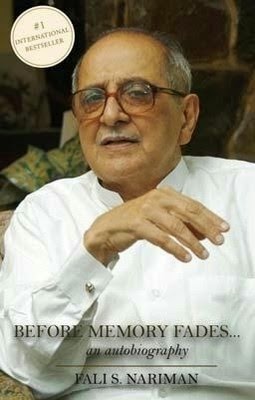
Before Memory Fades by Fali Nariman


My grandfather was a lawyer. Sometimes, while working on a complicated case, he would explain his arguments to me hoping that if I could understand the arguments, they would be clear to the judge as well. As a result, I developed an early interest in the law.

Earlier this year, I read Zia Mody’s concise yet insightful look at ten judgements that have impacted India in a big way. Fali Nariman’s memoirs complement this book and add much more in terms of the relationship between the executive and the judiciary, between politicians and lawyers, and between legal luminaries and juniors at the bar. I particularly liked the parts about the excellent training he received as a young lawyer in Bombay, and the challenges and dilemmas he faced in representing Union Carbide in the Gas Tragedy case. I guess lawyers have to be good at managing contradictions, at compartmentalizing things, as they sometimes have to support apparently conflicting perspectives in different cases.

Lyndall Urwick: Management Pioneer by Edward Brech, Andrew Thomson, and John F. Wilson


I hadn’t heard of Lyndall Urwick until I attended the Pan-IIM World Management Conference at IIM Kozhikode last month. One of the speakers, John Wilson, mentioned his name during his talk. It turns out that Wilson is the co-author of a book on Urwick, the pioneer of the scientific management movement in the UK. Urwick came from a business-owning family, but was shaped by his experience in the first World War, and became an evangelist of scientific management practices.

“Evangelist” is the right term to describe Urwick for he seems to have been undeterred in giving literally hundreds of talks, and writing a similar number of articles on his favourite theme. Though scientific management is usually associated with efficiency and productivity, Urwick had a larger canvas that included organization design and a humanitarian approach to the management of people. Like all pioneers, he faced several difficulties in getting his thoughts accepted, and the reception of his ideas in certain quarters was not helped by his direct speaking. In fact, his contributions were appreciated more in the United States than in his home country!

Overall, I was most impressed by Urwick’s commitment to his theme and the tireless persistence with which he pursued it over his lifetime. Reading this book made me wonder whether we had similar unsung proponents of management in India. From whatever I have read, the management movement in India, if it can be called that, started after independence and picked up steam in the 1960s thanks to people like Kamaladevi Chattopadhyaya, Vikram Sarabhai and Ravi Mathai. But some management innovations go back to the early part of the 20th century when the Tatas experimented with both efficiency improvements and welfare-oriented people practices (like limiting the work day to 8 hours). While many histories of Indian business exist, such as Dwijendra Tripathi’s wonderful books, I must look harder to see whether someone has written a history of management thought in India. If not, here is a great opportunity!

Stonewalled By Sharyl Attkinson

I found Sharyl Attkinson’s Stonewalled from the New York Times bestsellers list. Attkinson is a formidable journalist with an impressive list of awards to her credit. Investigative reporting is her forte. Stonewalled is all about how she became disillusioned with, and finally left, CBS News as the network channel thwarted her efforts to pursue investigative stories that would show the Obama administration in a poor light. Attkinson provides plenty of evidence to show that the predominantly “liberal” media establishment applies different standards to the coverage of Republican and Democratic presidents. But most alarming about her story is the extent to which the US government is willing to go to track and monitor someone they perceive as inimical to their interests. Quite an amazing story, fascinating, yet scary at the same time. Big Brother is watching!  

More Next Week


But, the most fascinating books I read on my Kindle so far all track parallel lives. I’ll write about these next week:

Sunday, December 7, 2014

Reflections on Recent Innovation Talks to Companies

In the last couple of months, there has been a spurt in my external speaking engagements on innovation. I am not sure why this is happening – perhaps its increasing optimism regarding the future, but it could be something more mundane like this being the preferred “season” for corporate events. Whatever the reason, it’s been fun to speak to a variety of audiences – a large multinational known for its print and imaging technologies; a leading public sector enterprise in defence electronics; a top global brand in denim; and a home-grown, pioneering consumer products company.

Organizational Rules and Innovation

I was impressed by the young and enthusiastic team of engineers at the public sector defence electronics company. They were engaged throughout the session and asked lots of questions.

One engineer was clearly chafing against what he saw as the rigidity in working conditions – fixed working hours and reporting times, authority structures, etc. He seemed convinced that innovation would be curbed under such constraints.


But what we know about innovation suggests that creativity is only one part of the innovation process. Particularly while validating, refining and sharpening an idea, discipline and perseverance is critical to the innovation process. We all know what happens when this phase of the innovation process is not given the attention it deserves – witness the problems that Boeing’s Dreamliner has faced thanks to inadequate testing and de-bugging of new technologies .

So, while the creative mecca might appear to be an organization that lacks rules and allows employees to come and go as they please, that might not quite mesh with reality. Take the case of Ideo, often regarded as the world’s top design firm – I haven’t visited them, but I have watched the shopping cart video several times, and it shows the team working morning to night every day. They might be allowed to wear whatever they want to office and hang up whacky things on the wall, but there is no let up as far as commitment to work is concerned.

Pursue your Passion or Align with the company?

Another interesting discussion was with a passionate individual contributor at the Indian consumer products company. His hand shot up almost immediately after I finished my presentation. He voiced his disagreement with one of the points I had made during the presentation – that it’s better to align one’s innovation efforts with the priorities of the company. His contention was that no radically new products or business opportunities would arise if one stuck to the existing areas of work within the company.

I explained the history of corporate R&D and how there was a phase immediately after the second world war when companies thought they could do almost anything driven by R&D, but how that phase had come to an end as increasing competition had reduced the resources available to pursue open-ended research work. Today, except for a few companies which hold monopolistic positions, few companies are able to afford R&D in areas that are not aligned to the business priorities of the company. So, if an employee wants to avoid frustration, and hopes to get buy-in from the business, she has little option but to work in areas that are likely to be of commercial benefit to the company.

Want to work on what takes your fancy? Work in a university or start something on your own if you have the resources to support it.

Consumer Orientation vs. Breakthrough Innovation

One question that comes up often is the link between consumer research and breakthrough innovation. In my talks, I emphasise the importance of immersion in the lives of consumers to understand their pains, identify waves and possibilities for elimination of waste. So, I am often asked whether this would not result in only innovation to meet the immediate needs of customers and thereby block any real breakthroughs.

But, in my view, there is a misconception here. Consumer research doesn’t mean asking consumers what they want as that is bound to be a limiting exercise resulting in incremental innovation. Good consumer research means living with consumers, watching how they consume and use products, what adaptations they have made in how they use products because of the limitations of products, etc.


Immersion helps understand needs that consumers have themselves not been able to articulate and to anticipate fresh needs. And, why was Steve Jobs able to get away without even this level of immersion? Possibly because he and his team were themselves high level users of many of the products and services that Apple offered.

How to Increase Velocity

At one of the companies, a big question was how to enhance velocity and make sure innovation projects move forward rapidly. While support for experimentation (providing resources and time, creating a culture where failure is not penalized) is one part of the story, the other is creating mechanisms to help ideas along their way. One important way of doing this is designing effective review processes. Every review should be both an opportunity for learning as well as an opportunity to remove obstacles. Reviews act as a pull and a pressure – members of the team feel obliged to display some progress since the previous review. Another useful mechanism is a formal incubation process.

Tailpiece: Innovation has unexpected scope

One benefit of visiting and speaking to so many companies is that you get to learn more about their innovations. Somehow, I never thought of denim and jeans as arenas for innovation – but, I recently learnt that Lee and Wrangler have tried out a whole range of new things.


Lee has a range called NoSweat that includes PerformAir that incorporates evaporative cooling; linen-blended denim for a cool and summery feel; Minerals with micro-encapsulated moisturizers to keep your skin lubricated; and Fragrant denim that slowly release sweet smells. Wrangler has jeans embedded with silver dust to act as an anti-bacterial, a boon for people who don’t/can’t wash their jeans often. And, soon to come is a new denim that is warm in winter and cool in summer thanks to some revolutionary fabric research from a company called Coolmax.


Just look at how many things you can do in just one area!

Saturday, November 22, 2014

Bilcare and AP Organics win CII Industrial Innovation Awards

Awards and recognition play an important role in encouraging innovation. The government has been giving awards for several years now, but with a focus on technological innovation. While these government awards were decided by eminent juries, they lacked an in-depth assessment process. But, in areas like quality (think of the Malcolm Baldridge or equivalent awards), an important part of the selection process is the in-depth assessment carried out by qualified assessors. So, when CII decided, after several years of internal debate, to institute industrial innovation awards this year, such an assessment became an integral part of the process.

Having been on innovation award juries before, I have found that the challenge is to balance creativity, outcomes, and potential future impact. It’s sometimes difficult to compare a very simple idea with huge potential impact with a novel yet complex technological concept  that could appear ahead of its time today but revolutionise the industry later. Not surprisingly, such debates were an important part of the deliberations of the jury for the CII Industrial Innovation awards that were announced a few days ago. A highlight of the jury was its international composition and the enthusiastic participation of some members who had flown thousands of miles to be a part of the process.

Knowing my penchant for writing on interesting innovations I have seen, one of my co-jury members started teasing me during the presentations that he “didn’t want to see all the confidential details splashed on my blog.” I have taken his caution to heart and all the information given here is based on what is available in the public domain!

I will restrict my comments to the two winners in the manufacturing category. The applications for services innovation tend to be dominated by IT, and I rarely see eye-catching ideas in this domain.

This Year’s Winners – Manufacturing

Bilcare, a Pune-based packaging solutions company won an award for what it calls nonclonableID ™ technologies. These are used to prevent counterfeiting and provide a validation of the originality of products across a variety of industries ranging from pharmaceuticals to automobile components. In India, the government has been particularly interested in these solutions because of rampant counterfeiting and tampering. The Blicare solution creates a unique material fingerprint for each product or component passing through a supply chain and provides an end-to-end solution of verification and validation.


AP Organics, a Sangrur-based company, is a leading producer of rice bran oil under the Ricela brandname. The company’s distinctiveness is based on the patented physical refining process it has pioneered that preserves important ingredients such as Oryzanol which has anti-cholesterol properties. Today, the company has also effectively backward integrated, and through its decentralized sourcing and processing, is able to source rice bran from multiple centres across the country and use it before its short shelf life is over.


What’s Common to Both

The cases of both Bilcare and AP Organics underline the importance of working on the “right” problems.
Counterfeiting and duplication erodes the brand value of companies and poses significant losses to customers. It can be extremely dangerous too in products like drugs. And counterfeiters are becoming more sophisticated, so solutions have to become better too.

Not only is large import of edible oils a macroeconomic problem for India, heart disease is becoming an important lifestyle hazard. Yet, the Indian palate is unlikely to change in a hurry. Domestic production of “good” oils is therefore a priority.

Both of these are good examples of the “pain-wave-waste” criteria for problem selection that Vinay Dabholkar has stressed in our 8 Steps to Innovation.


The Importance of End-to-End Innovation

Both Bilcare and AP Organics show that end-to-end innovation has become necessary in many product categories. Of the two, AP Organics appears to have been commercially more successful, possibly because it is easier for it to manage the entire process. The Bilcare technology itself looks to be sound, but involves system-level implementation which is not always easy.

Both Bilcare and AP Organics have shown the value of their innovation in international markets though exports and international usage.

Both innovations have taken time to mature. In fact, Bilcare’s technology is still not ubiquitous even though some customers like a Japanese automotive component manufacturer have established its utility.

Surprises

I was both somewhat intrigued and saddened by the relative absence of Indian pharmaceutical companies in the final shortlist. While my fellow jury members were quick to explain this away by recalling the industry’s focus on generics, pharma is even today India’s most R&D intensive industry. And, not so long ago, we had several Indian firms undertaking courageous drug discovery programmes. I hope this is just a blip and that we will see many Indian pharma firms intensifying their efforts to discover new drugs or drug discovery systems in the years ahead.

Tailpiece


Let’s hope that the new CII Industrial Innovation Awards grow from strength-to-strength and become highly coveted awards in the years ahead.